Silent Productivity Killers at Work

Your team seems busy. Everyone's clocking in, working hard, and staying late when needed. But somehow, projects still drag on longer than expected, labor costs keep creeping up, and you can't shake the feeling that things should be running smoother.
Welcome to the world of silent productivity killers: those sneaky workplace habits and outdated processes that drain efficiency without making a sound. Unlike obvious problems (like a broken computer or a no-show employee), these issues lurk in the background, slowly bleeding time, money, and team morale.
For small business owners and team leaders, these silent killers are especially dangerous because they're often mistaken for "just how business works." But here's the thing: they don't have to be.
Related Podcast: Episode 45: Silent Productivity Killers at Work
The Paper Trail That's Holding You Back
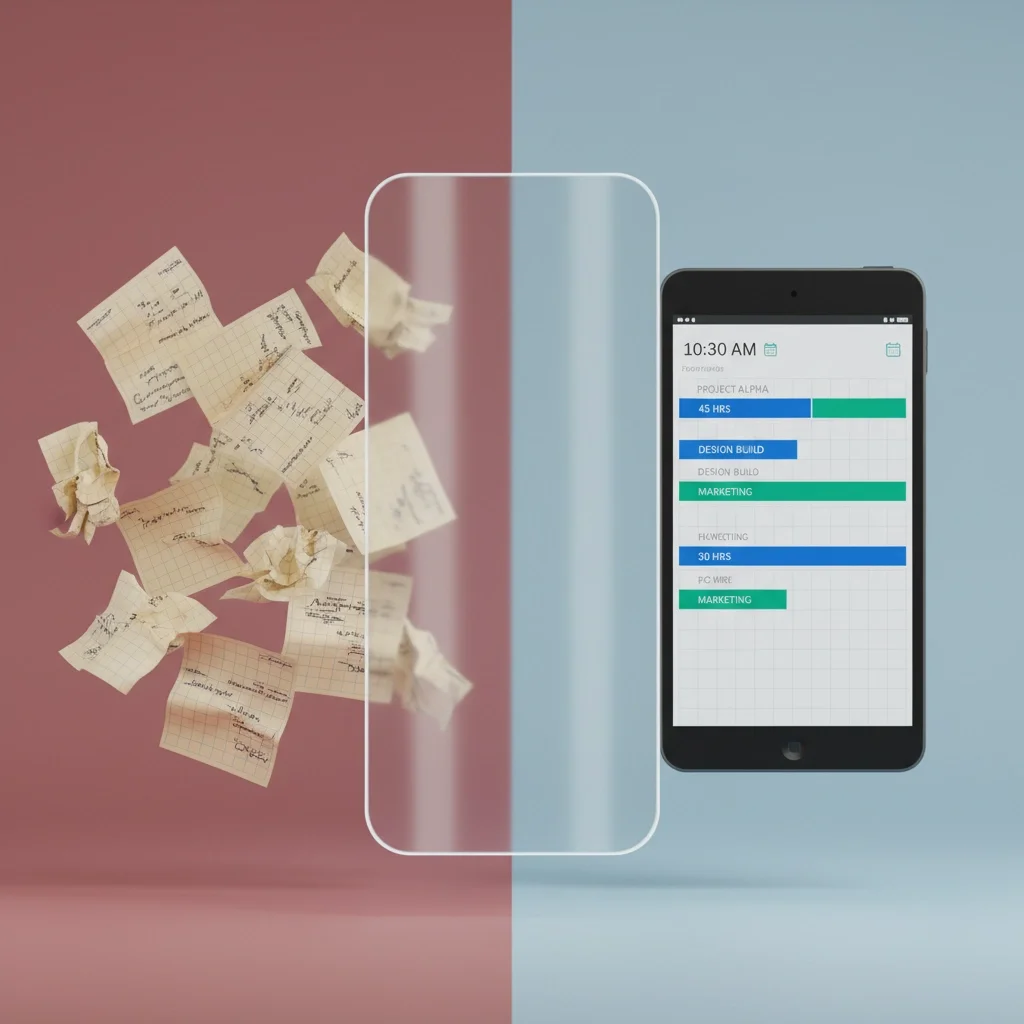
Let's start with the most common culprit: outdated time tracking methods. If your team is still using paper timesheets, punch cards, or manual processes to track hours, you're dealing with a productivity killer that's hiding in plain sight.
Think about it. Every time an employee fills out a timesheet at the end of the week, they're guessing. "Was I here until 5:30 or 6:00 on Tuesday?" These small inaccuracies add up fast, leading to payroll discrepancies that eat into your profit margins.
But the real killer isn't just the inaccuracy: it's the time waste. Managers spend hours each week collecting, reviewing, and entering timesheet data. Employees spend time hunting down supervisors for signatures or trying to remember exactly when they took their lunch break three days ago.
As we covered in our post about why paper timesheets are dead in 2025, manual tracking methods create a cascade of inefficiencies that most business owners severely underestimate. The solution? Digital time tracking that captures data automatically and eliminates the guesswork.
Schedule Confusion: The Communication Breakdown
Here's a scenario that plays out in thousands of small businesses every day: An employee shows up for their shift, only to find out their schedule changed yesterday. Or worse, two people show up for the same shift while another position goes uncovered.
Unclear schedules and poor communication around shifts create a domino effect of productivity loss. When employees don't know when they're supposed to work, they can't plan their personal time effectively, leading to stress and potential no-shows. When managers don't have visibility into who's working when, they can't optimize labor allocation.
The silent killer here isn't just the confusion: it's the ripple effect. A missed shift means other employees work overtime (increasing labor costs), customer service suffers, or managers have to drop everything to cover the gap themselves.
The Manual Process Trap
Small businesses often start with manual processes because they seem simple and cost-effective. But as you grow, these manual tasks become productivity quicksand.
Consider the weekly routine many business owners know too well: collecting timesheets, calculating hours, figuring out overtime, processing payroll, and updating employee records. Each step requires manual data entry, verification, and often, re-entering the same information into multiple systems.
This manual approach doesn't just waste time: it creates opportunities for errors that cost money. A miscalculated overtime hour here, a missed break deduction there, and suddenly your labor costs are higher than they should be.
The trap is thinking these processes are "good enough" when they're actually costing you more than you realize. As we discussed in our guide on outsourcing business tasks, sometimes the best solution is to automate or systematize these routine processes rather than continue handling them manually.

The Overtime Creep Nobody Sees Coming
Here's a silent killer that catches many business owners off guard: untracked overtime. It starts innocently enough: an employee stays an extra 15 minutes to finish a task, or clocks in 10 minutes early to prep for the day.
These small overages seem insignificant, but they add up fast. An employee who consistently works 30 minutes of unplanned overtime per week costs you an extra 26 hours of overtime pay annually. Multiply that across your team, and you're looking at thousands in unbudgeted labor costs.
The silent part is that this overtime often goes unnoticed until it's too late. Without real-time tracking, you only discover the issue when payroll comes in higher than expected. By then, the habit is established, and the money is gone.
The Visibility Gap
Perhaps the most insidious productivity killer is simply not knowing what's happening with your workforce in real-time. When you can't see who's working where, whether they're staying productive, or if they're approaching overtime, you're managing in the dark.
This lack of visibility creates a reactive management style. Instead of preventing problems, you're constantly putting out fires. Instead of optimizing schedules, you're scrambling to cover shifts. Instead of controlling labor costs, you're explaining budget overruns.
The challenge with visibility gaps is that they feel normal until you experience what it's like to have real-time workforce insights. It's like driving without a speedometer: you might get where you're going, but you'll never optimize the journey.

Breaking Free from Silent Killers
The good news is that most silent productivity killers have straightforward solutions. The key is recognizing them for what they are and taking action before they become bigger problems.
Start by auditing your current processes. How much time do you and your team spend on administrative tasks that could be automated? How often do scheduling mix-ups disrupt your operations? How accurate is your time tracking, really?
Modern workforce management tools can eliminate most of these silent killers automatically. Digital time tracking ensures accuracy, automated scheduling prevents confusion, and real-time reporting gives you the visibility you need to manage proactively instead of reactively.
For example, when your team can clock in and out digitally, you eliminate timesheet guesswork and get instant visibility into who's working when. When schedules are managed digitally and automatically shared with your team, you prevent those costly miscommunications.
The Compound Effect of Small Changes
What makes silent productivity killers so dangerous: and solving them so powerful: is the compound effect. Each small inefficiency might not seem like much on its own, but together, they create a significant drag on your business.
The flip side is also true. When you eliminate these silent killers, the improvements compound. Better time tracking leads to more accurate payroll, which leads to better cost control. Clear scheduling leads to better workforce planning, which leads to improved customer service.
As we explored in our post about avoiding burnout while staying consistent, many productivity issues stem from trying to manage too many manual processes. When you systematize and automate the routine stuff, you free up mental energy for the strategic work that actually grows your business.

Making the Invisible Visible
The first step in eliminating silent productivity killers is making them visible. Track how much time you spend on manual processes each week. Document when scheduling issues arise and what they cost you. Calculate the real impact of inaccurate time tracking on your bottom line.
Once you can see the true cost of these silent killers, the path forward becomes clear. The question isn't whether you can afford to modernize your workforce management: it's whether you can afford not to.
Remember, as we discussed in our piece on the delegate-or-do-yourself founder dilemma, your time as a business owner is your most valuable resource. Every hour you spend wrestling with manual processes is an hour you're not spending on growing your business.
The silent productivity killers lurking in your workplace don't have to be permanent residents. With the right tools and processes, you can eliminate them one by one, creating a more efficient, profitable, and less stressful work environment for everyone.
The key is to start somewhere, even if it's just digitizing your time tracking or cleaning up your scheduling process. Small changes lead to big improvements when you're dealing with issues that touch every aspect of your daily operations.