The Downstream Effects of Vague Instructions

"Handle the Johnson project" lands in your crew leader's inbox at 8 AM. By lunch, three different interpretations of "handle it" have already created a mess that'll take days to untangle.
Sound familiar? You're not alone. Vague instructions might seem like a minor communication hiccup, but they're actually profit-eating monsters that create chaos throughout your entire operation.
Related Podcast: Episode 54: Effects of Vague Instructions

The Anatomy of Vague Instructions
Vague instructions come in many shapes, but they all share one thing: they leave too much room for interpretation. Here are the usual suspects:
The Time Bomb: "Get this done ASAP" (What's ASAP? Today? This week? Before the heat death of the universe?)
The Mind Reader: "You know what I mean" (Spoiler alert: they don't)
The Assumption: "Handle it like we discussed" (Which discussion? The one three weeks ago or yesterday's parking lot chat?)
The Perfectionist: "Make it look professional" (Professional like a law firm or professional like a food truck?)
These instructions feel efficient when you're rushing out the door, but they're actually time bombs waiting to explode in your operation.
The Immediate Chaos
When instructions lack clarity, teams don't just sit around scratching their heads. They make assumptions and get to work. This creates immediate problems that ripple through your business like a stone thrown in a pond.
Multiple Interpretations: Your crew leader interprets "clean up the site" as basic debris removal. Meanwhile, your client expected pressure washing and landscape restoration. Both sides think they're right because the original instruction could mean either.
Wasted Resources: Team members start working on their best guess of what you wanted. Half the team begins one approach while the other half pursues a completely different strategy. You've just doubled your labor costs for a single task.
Decision Paralysis: Some team members recognize the instruction is vague but don't want to admit confusion. They spend time trying to decode what you meant instead of actually working, turning productive hours into expensive guessing games.
The research on AI systems shows that vague prompts lead to hallucinations and errors. Human teams aren't much different, unclear direction forces people to fill in gaps with their own assumptions, often incorrectly.

The Cascade Effect
The real damage from vague instructions isn't the initial confusion, it's everything that happens next. Like a manufacturing defect that gets worse as it moves down the production line, unclear communication compounds as it spreads through your operation.
Quality Control Breakdown: When your field team doesn't understand the exact standard you expect, they deliver work that meets their interpretation of "good enough." This creates silent productivity killers that slowly erode your reputation without you realizing it.
Client Relationship Damage: Vague internal instructions often translate to unclear communication with clients. When your team can't confidently explain the plan or timeline, clients lose confidence. Before you know it, customers stop calling back and you're wondering why.
Team Morale Issues: Nothing frustrates good employees more than repeatedly having to redo work because the original direction wasn't clear. They start second-guessing every instruction, slowing down even simple tasks as they seek constant clarification.
Training Impossibility: How do you train new employees when the standards themselves are unclear? Vague instructions create an environment where knowledge can't be systematically transferred, making every new hire a gamble.
The Hidden Financial Impact
Vague instructions don't just waste time, they systematically drain profits in ways that don't show up in obvious line items.
Labor Multiplication: When a job gets done wrong the first time, you don't just pay to fix it, you pay for the original work plus the correction. A $500 task becomes a $1,200 problem overnight.
Opportunity Cost: While your team spends extra hours deciphering and correcting vague instructions, they're not working on new projects. This invisible cost compounds over time as you miss opportunities to grow revenue.
Client Acquisition Costs: Poor execution from unclear direction damages client relationships. Replacing lost clients costs 5-25 times more than keeping existing ones satisfied. Your vague morning instructions could cost you thousands in lost business.
Reputation Recovery: In service businesses, word travels fast. One project executed poorly due to unclear communication can impact future sales for months. The true cost of vague instructions might not appear until your pipeline starts drying up.
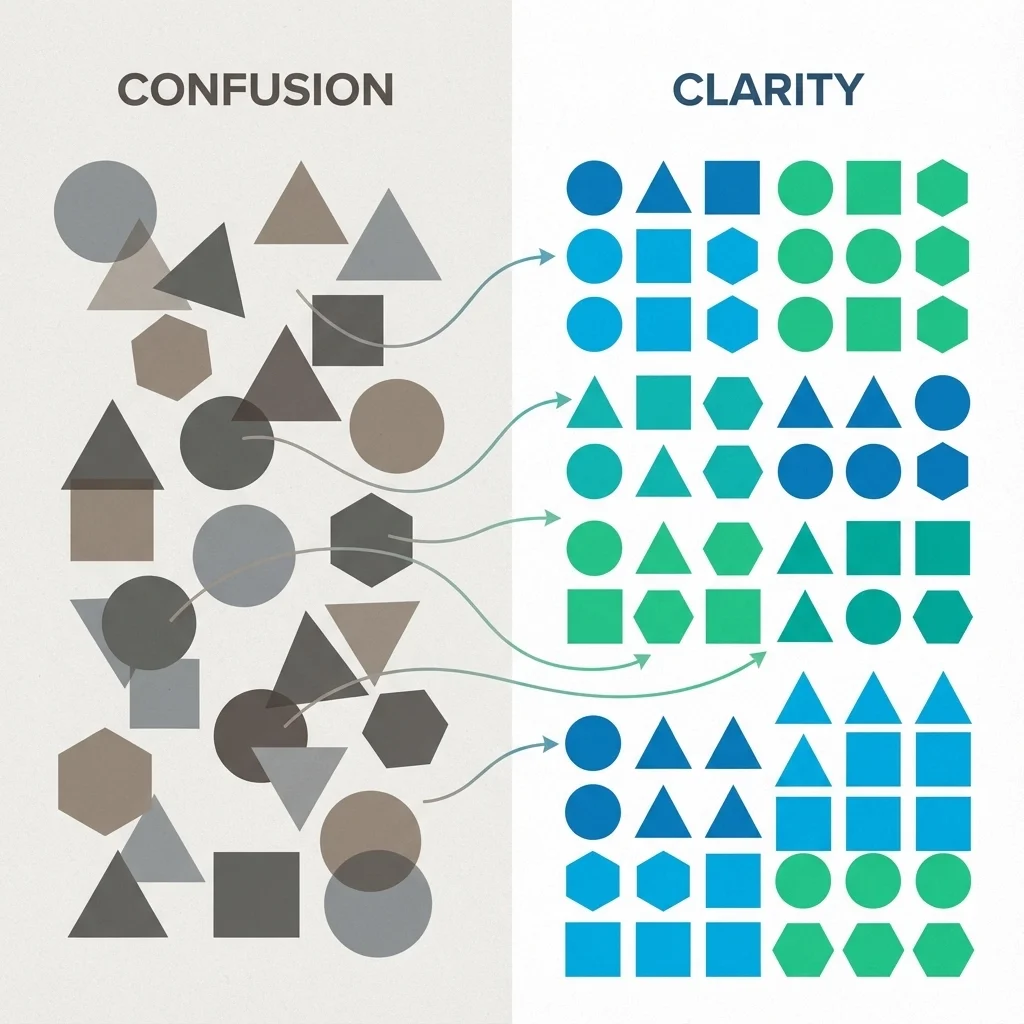
Breaking the Vague Instruction Cycle
The good news? This is completely fixable. Clear communication isn't rocket science, it just requires intentional systems and habits.
The Five W's Plus H: Every instruction should answer Who, What, When, Where, Why, and How. "Handle the Johnson project" becomes "Sarah, please complete the landscape restoration at 123 Main Street by Friday 5 PM because they're hosting an event Saturday. Use the irrigation repair protocol from our manual and document before/after photos."
Specific Success Metrics: Instead of "make it look professional," try "ensure all edges are straight within 1/4 inch, debris is completely removed, and the client can walk the area in business shoes without stepping on anything."
Confirmation Loops: Require your team to repeat back their understanding of the task. "So I'm completing X by Y time using Z method, correct?" This catches misunderstandings before they become expensive mistakes.
Written Documentation: Verbal instructions get forgotten or misremembered. Important directions need to be written down where they can be referenced throughout the project.
Just like great team ideas get overlooked when communication breaks down, great instructions get lost in translation without proper systems.
Building Communication Systems That Scale
Individual effort isn't enough: you need systems that make clear communication automatic, especially as your business grows.
Standard Operating Procedures: Create templates for common instructions. Instead of explaining how to "clean up a job site" every time, develop a checklist that defines exactly what completion looks like.
Digital Documentation: Use technology to your advantage. Digital systems can store detailed instructions, photo references, and completion checklists that teams can access from anywhere.
Feedback Mechanisms: Create easy ways for team members to ask for clarification without feeling stupid. Many communication problems persist because people are afraid to admit confusion.
Regular Training: Your communication standards should be taught, not assumed. Regular training sessions help teams understand not just what to do, but how to interpret and execute instructions consistently.
The companies that turn deadline problems into growth wins are usually the ones that invested in clear communication systems before they needed them.

Technology as Your Communication Partner
Modern businesses don't have to rely solely on memory and good intentions. Technology can help standardize and clarify instruction delivery.
Project management tools can store detailed job requirements, photo references, and step-by-step procedures. Team members can access complete instructions, mark tasks complete, and ask questions without playing phone tag.
Time tracking systems can help identify when vague instructions are creating efficiency problems. If similar tasks have wildly different completion times, unclear direction might be the culprit.
Digital forms and checklists ensure that important details don't get skipped or forgotten. Instead of hoping your crew leader remembers all the client's specific requirements, systems can prompt them through every critical item.
Labor Sync helps businesses build these kinds of communication systems by providing clear project tracking, standardized procedures, and team coordination tools. When everyone can access the same detailed information about what needs to be done and how to do it, vague instructions become a thing of the past.
The Compound Benefits of Clarity
Investing in clear communication creates benefits that multiply over time. Teams work faster when they don't have to guess what you want. Quality improves when everyone understands the standard. Client satisfaction increases when projects are completed correctly the first time.
Perhaps most importantly, clear instructions create a culture of excellence. When you consistently communicate specific expectations, your team learns to work at that level of precision in everything they do.
Your business becomes predictable in the best possible way. Clients know what to expect, team members know how to deliver, and you know that your instructions will be executed exactly as intended.
The downstream effects of vague instructions can sink a growing business. But the downstream effects of crystal-clear communication? They can transform your entire operation into a well-oiled profit machine.