2026 Labor Law Changes Businesses Should Watch
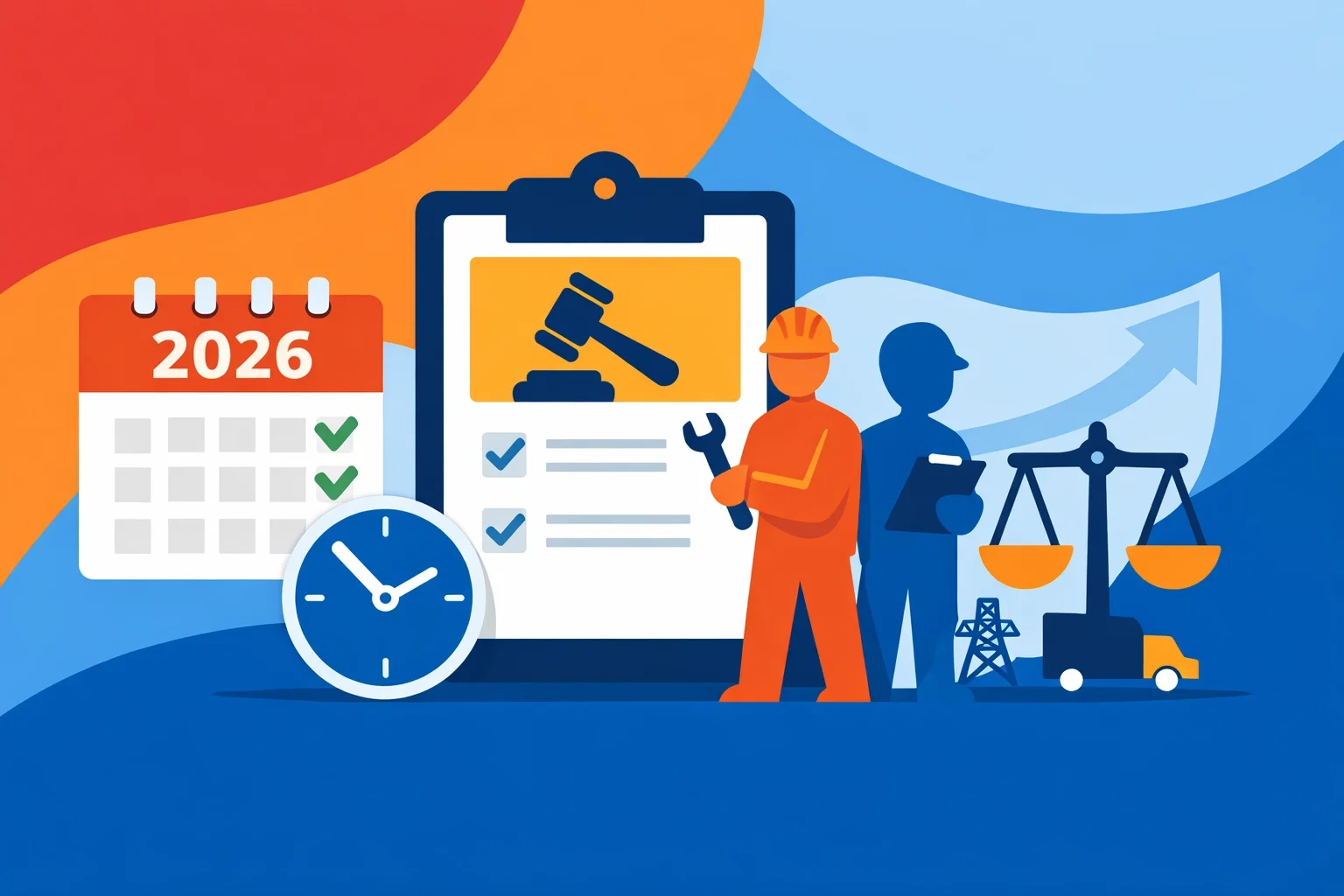
If you run a field service business, January 1st probably means more to you than champagne and resolutions. It's when new labor laws kick in, and 2026 is packed with them.
Between expanded paid leave programs, new meal break requirements, minimum wage bumps in nearly 20 states, and tighter rules around who counts as an employee versus a contractor, there's a lot to track. And if your crew is scattered across job sites instead of sitting in one office? You're playing compliance on hard mode.
The good news: staying on top of these changes isn't just about avoiding penalties. It's actually a competitive edge. Businesses that nail compliance attract better workers, avoid costly lawsuits, and don't lose sleep wondering if an audit will sink them.
Let's break down what's new, why field businesses are especially vulnerable, and how to protect yourself without drowning in paperwork.
What's Actually Changing in 2026?
Paid Family and Medical Leave (PFML) Goes Live in More States
Minnesota and Maine both launched major PFML programs this year. Minnesota's program kicked off January 1st, offering employees up to 12 weeks of medical leave and 12 weeks of family leave (maxed at 20 weeks total per year). It's funded through a 0.88% payroll premium split between you and your workers, and payroll deductions started immediately.
Maine's version goes live May 1st with similar benefits, up to 12 weeks of paid leave. But here's the kicker: Maine also dropped the job restoration eligibility threshold from the old 12-month/1,250-hour standard down to just 180 days of employment. That starts phasing in for employers with 25+ workers on January 1st.
For field businesses, this means tracking eligibility across crews that might have seasonal workers, part-timers, and people bouncing between job sites. Miss the threshold calculation? You're looking at compliance violations before you've even poured your morning coffee.
Meal and Rest Breaks Aren't Negotiable Anymore
Minnesota and Maine also rolled out strict meal and rest break requirements as of January 1st. The rule: provide at least 15 minutes of rest (or enough time to reach the nearest bathroom, whichever is longer) for every four consecutive hours worked. If someone's working six or more hours, they need an unpaid 30-minute meal break.
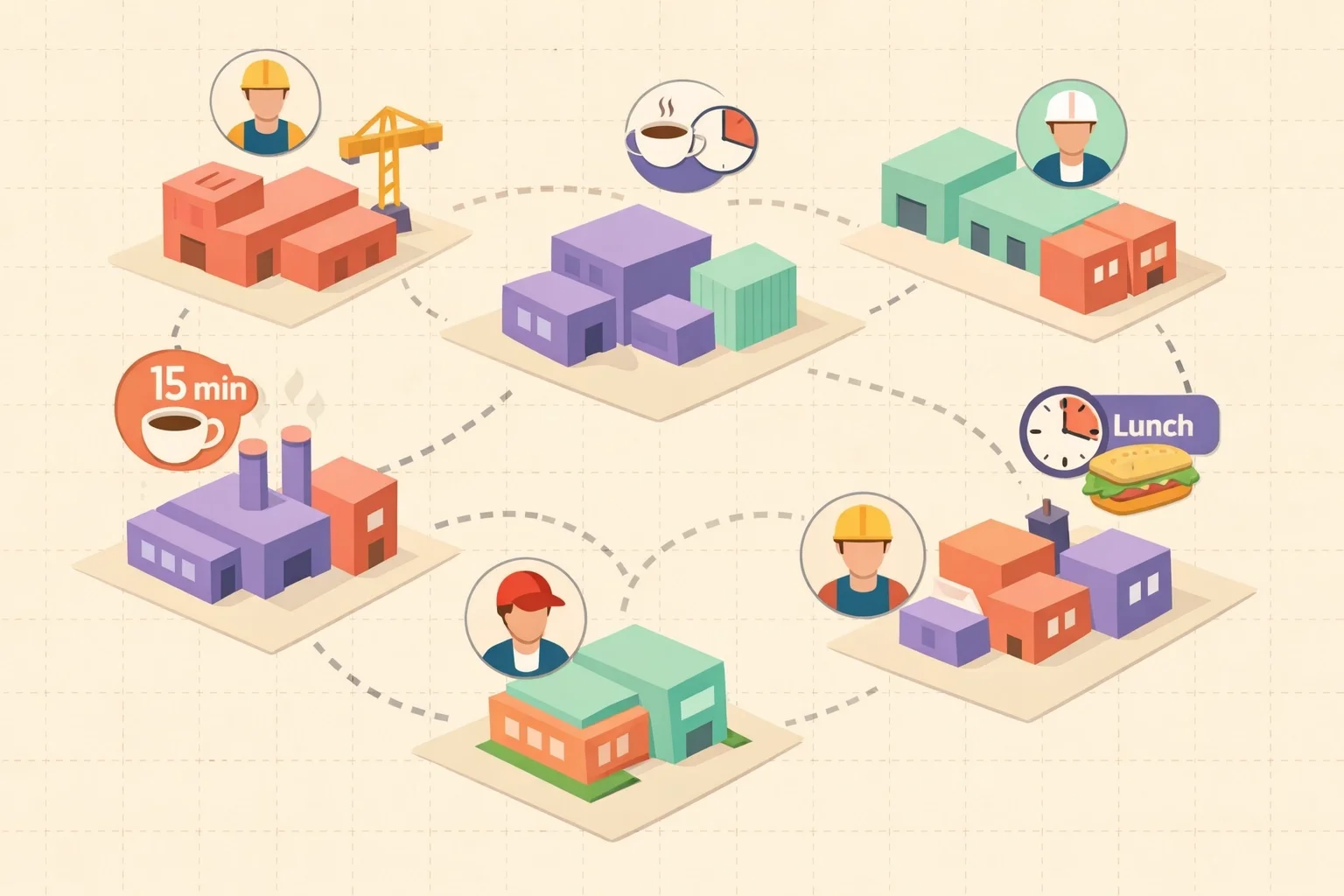
Sounds simple until your crew is 45 minutes from the nearest restroom, spread across three different job sites, and you're trying to coordinate breaks without blowing the schedule. Field work doesn't fit neatly into an office break room model, which is exactly why so many businesses slip up here.
You need timekeeping systems that can differentiate between paid rest breaks and unpaid meal breaks, and prove it if someone comes asking.
Minimum Wage Increases Are Everywhere
At least 19 states bumped their minimum wages on January 1st. Maine's sitting at $14.56 per hour now, and agricultural workers, who were previously exempt from some protections, must now get overtime pay for anything over 50 hours per week.
If you operate across state lines (or even just different counties with local wage ordinances), you're juggling multiple pay rates. Get it wrong and you're liable for back wages, liquidated damages, attorneys' fees, and fines ranging from $50 to $10,000 depending on whether it's a first-time mistake or a pattern.

Independent Contractor Classification Is Under a Microscope
The Department of Labor and various state agencies are cracking down hard on misclassification. The test is getting stricter: Does the worker control how they do the job? Do they have their own business? Are they integral to your operation?
Field businesses love the flexibility of contractors, it's how the industry has worked forever. But if you're providing the tools, setting the schedule, and controlling the work, that "contractor" might legally be an employee. And if the state decides you misclassified them, you're on the hook for back taxes, unemployment insurance, workers' comp, and benefits.
One audit can turn into a six-figure nightmare.
Why Field Businesses Are Sitting Ducks for Compliance Issues
Here's the uncomfortable truth: remote work makes you an easier target.
When your crew is out in the field, nobody's watching the clock. There's no supervisor standing there saying "Hey, you've been working four hours: take your break." Employees might skip breaks to finish a job faster, work through lunch to beat traffic, or clock in early without authorization. All of which creates liability for you, whether you knew about it or not.
Then there's documentation. Office workers have punch clocks, badge swipes, and digital trails. Your field crew? Maybe they're texting you "I'm here" or scribbling start times on a piece of paper that gets lost in a truck. When an investigator asks for proof of break compliance or accurate overtime calculations, "We trust our guys" doesn't cut it.
Field businesses also tend to have higher turnover, more seasonal hiring, and workers who bounce between full-time and part-time status. That makes eligibility tracking for PFML and benefits a moving target. Miss one calculation and you're non-compliant.
If you've ever thought "Nobody's going to audit us," remember: the agencies don't need a reason. Random audits happen. Disgruntled ex-employees file complaints. One mistake can trigger a deep dive into years of records.
How to Actually Stay Compliant (Without Losing Your Mind)
1. Audit Your Current Practices Now
Pull your records and ask hard questions: Are you tracking breaks properly? Do you have documentation proving meal periods were offered? Are your overtime calculations accurate down to the minute? If the answer to any of those is "probably" or "I think so," you've got work to do.
Compare your practices against the new 2026 requirements for every state you operate in. This isn't fun, but it's cheaper than a lawsuit.
2. Update Your Timekeeping Systems
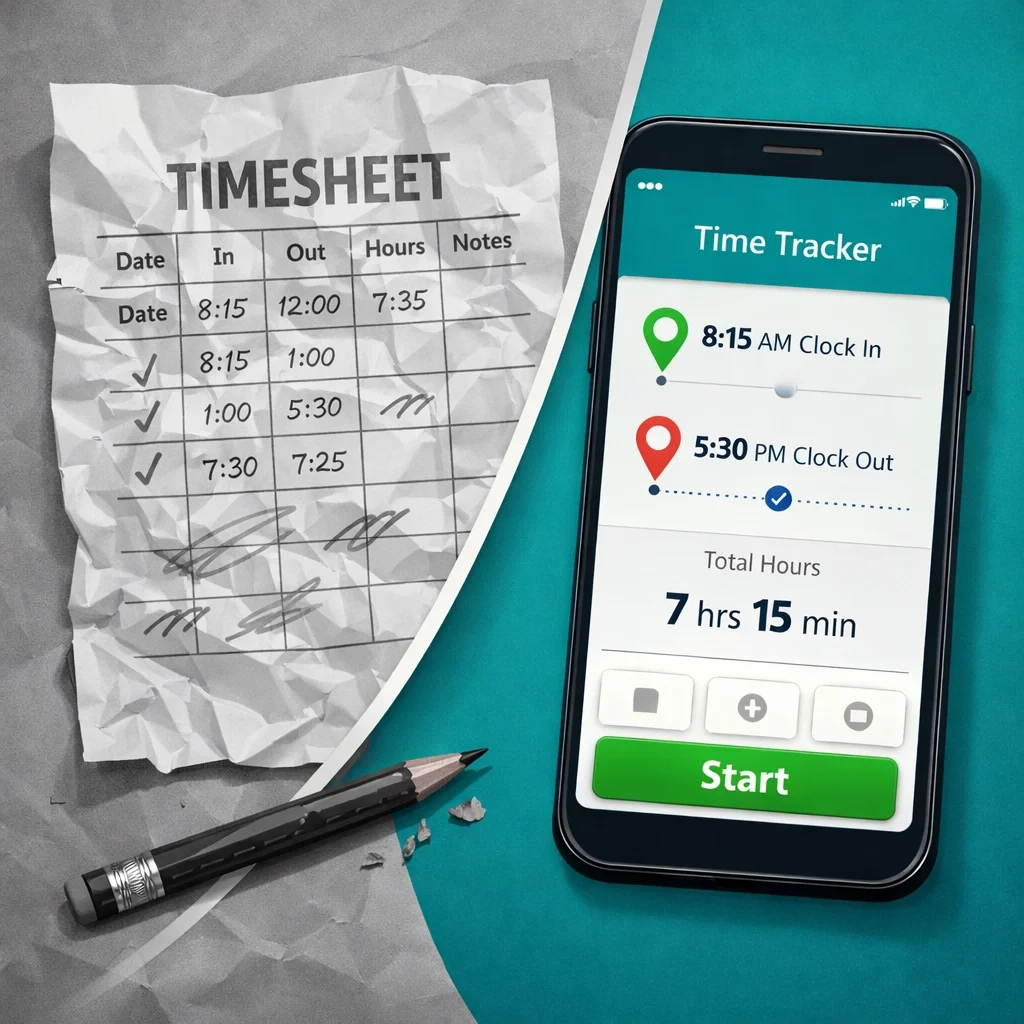
Paper timesheets and honor-system clock-ins won't survive modern compliance standards. You need digital systems that:
Capture exact clock-in and clock-out times
Track breaks separately (paid vs. unpaid)
Calculate overtime automatically based on actual hours worked
Store records securely for audit purposes
GPS-backed time tracking is especially valuable for field crews. It proves not just when someone worked, but where: which matters when employees claim they worked off-the-clock or didn't receive required breaks. The timestamp and location data creates an evidence trail that protects you if disputes arise.
(This is where tools like Labor Sync come in handy: GPS tracking tied to precise time records means you're not guessing when audit time comes.)
3. Train Your Supervisors and Foremen
Your field leaders need to understand the new rules just as well as you do. They're the ones scheduling breaks, approving overtime, and managing crew movements. If they don't know that Minnesota requires specific rest break timing, they'll schedule right through it.
Run training sessions. Create quick-reference guides. Make compliance part of the job, not an afterthought. And for more on keeping scattered crews aligned, check out our post on team cohesion with scattered crews.
4. Review Your Contractor Relationships
Go through your contractor list with fresh eyes. Are these people truly independent, or are they effectively employees you're just labeling differently? If you're setting their hours, providing all their tools, and controlling how they work, it's time to reclassify them before the state does it for you.
This isn't about being paranoid: it's about being honest. Misclassification penalties are no joke, and the risk isn't worth the short-term savings.
5. Build Compliance Into Your Workflows
Don't treat compliance as a separate thing you do once a year. Build it into daily operations. Use systems that flag potential overtime before it happens. Set automatic reminders for break requirements. Make record-keeping part of the job closeout process.
The businesses that handle compliance best are the ones who've made it invisible: it just happens as part of normal work. If you're constantly scrambling to reconstruct records or remember who worked what hours last month, your system is broken. Our guide on streamlining processes to save money has practical tips for embedding compliance into your workflows.
Compliance Is a Competitive Advantage (Really)
Here's the part most people miss: being compliant isn't just about avoiding penalties. It's about running a better business.
When you track time accurately, you know your true job costs. You can bid more competitively because you're not guessing. You catch profitability issues before they become disasters. (We covered this in depth in our post about metrics that improve field performance.)
Workers notice when you get payroll right every time, provide required breaks, and treat them fairly under the law. That's how you attract and keep good people in a tight labor market. Compliance = less turnover = lower training costs = more experienced crews = better work.
And when you do get audited (because eventually, everyone does), you hand over clean records and move on with your day instead of spending weeks in panic mode trying to recreate documentation that doesn't exist.
The Bottom Line
2026's labor law changes are significant, and field businesses are uniquely vulnerable because of the distributed nature of the work. But the solution isn't complicated: track accurately, document everything, and use technology that creates audit-ready records automatically.
The businesses that treat compliance as an operational priority: not a legal headache: are the ones that will thrive. They'll avoid penalties, win better workers, understand their true costs, and sleep better at night.
If your current systems rely on trust, memory, or paper trails that get lost in truck beds, it's time for an upgrade. The regulations aren't getting simpler, and the penalties for mistakes aren't getting smaller.
But here's the good news: once you build compliance into your systems, it's not extra work anymore. It's just how you operate. And that's when you stop worrying about audits and start focusing on growing your business.
For more on how technology can help you manage field operations better (and stay compliant while doing it), check out our posts on scaling without losing visibility and why business feels harder lately.