Why Scaling Feels Like Losing Visibility

Remember when you could walk around your office and instantly know what everyone was working on? When Sarah was stressed about the Henderson project, when Mike was cruising through his tasks, and when the whole team was buzzing about landing that big client?
Those days feel like ancient history now.
If you're running a growing business, you've probably experienced that unsettling moment when you realize you have no idea what's actually happening in your company anymore. It's not that your team suddenly became secretive or lazy: it's that scaling inherently creates blind spots that didn't exist when you were smaller.
The Small Team Advantage (That You Didn't Know You Had)
In small teams, visibility happens naturally. You overhear phone calls, see who's stressed, notice when someone's computer screen has been showing the same spreadsheet for three hours. This organic awareness isn't just nice to have: it's how you catch problems before they become disasters.
But here's what nobody tells you about scaling: that natural visibility doesn't scale with your headcount.
When your team grows from 5 to 15 people, you might still maintain some of that casual awareness. But somewhere around 25-50 employees, the wheels start coming off. According to research, 70% of startups struggle to maintain accountability and culture once they cross the 50-employee mark, and it's precisely because they've lost the natural visibility that existed at smaller scale.
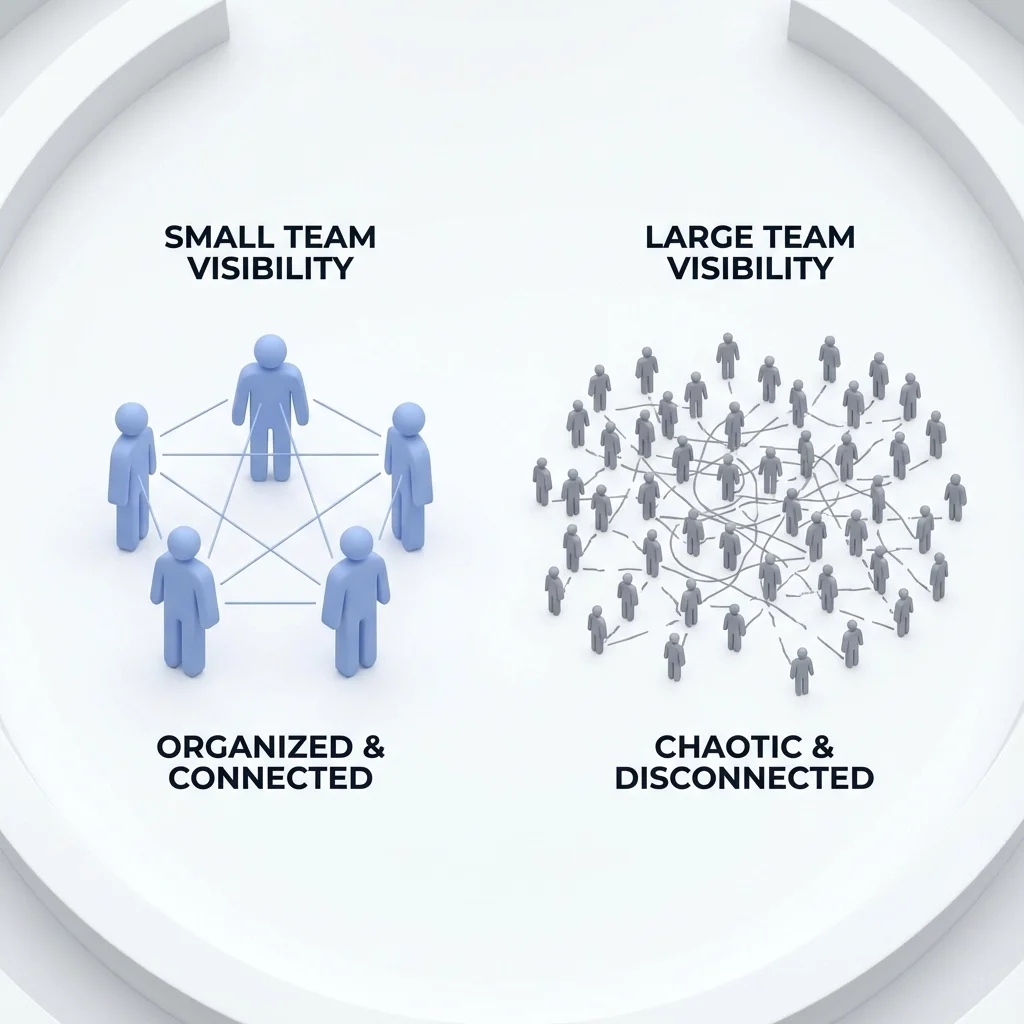
The math is simple but brutal: with 5 people, you have 5 relationships to manage. With 50 people, you suddenly have hundreds of potential communication paths, project dependencies, and performance variations to track. Your brain literally cannot process all of it anymore.
When Trust-Only Management Hits a Wall
Most successful small businesses operate on what we call a "trust-only" model. You hire good people, give them clear goals, and trust they'll get the work done. It's beautiful in its simplicity.
But trust-only management has a fatal flaw: it assumes problems will surface naturally or that team members will proactively communicate issues. In a small, co-located team, this usually works. Problems bubble up through casual conversations, you notice behavioral changes, and team members feel comfortable approaching you directly.
As companies scale and spread across locations (or go hybrid), these natural communication channels break down. Suddenly, you're managing people you see only on scheduled Zoom calls. Critical information that used to flow freely now gets trapped in silos.
The result? Issues like uneven workload distribution, employee disengagement, or project delays remain hidden until they manifest as missed deadlines, client complaints, or good employees quitting without warning. By then, you're not managing: you're just putting out fires.
This challenge has become particularly acute in our post-2020 world. A staggering 47% of remote and hybrid managers cite lack of visibility as their single biggest challenge. They're flying blind, trying to manage teams they can barely see.
The System Breakdown That Nobody Saw Coming
Here's another painful truth about scaling: the systems and processes that got you to 20 employees will actively hurt you at 50 employees.

Think about your current project management approach. Maybe you use Slack for quick updates, email for formal communication, spreadsheets for tracking, and good old-fashioned conversations for everything else. With a small team, this patchwork system feels efficient and flexible.
But as you grow, these informal systems create information silos. The sales team knows something that operations doesn't. The project managers have data that the executives never see. Important decisions get made in side conversations that half the team never hears about.
According to business research, 87% of leaders cite manual processes and data silos as major barriers to growth. Without transparency, complexity breeds confusion: and confused teams make expensive mistakes.
Your crew leaders might be doing excellent work, but if their methods and results aren't visible to the broader organization, that knowledge dies with them when they leave or get promoted.
The Hidden Productivity Killers
When you lose visibility during scaling, you also lose the ability to spot silent productivity killers that are costing you money every day.
In small teams, it's obvious when someone is overwhelmed or underutilized. You see Jessica staying late every night while Tom leaves at 3 PM. You notice that certain types of projects always seem to run over budget, or that specific clients are particularly demanding.
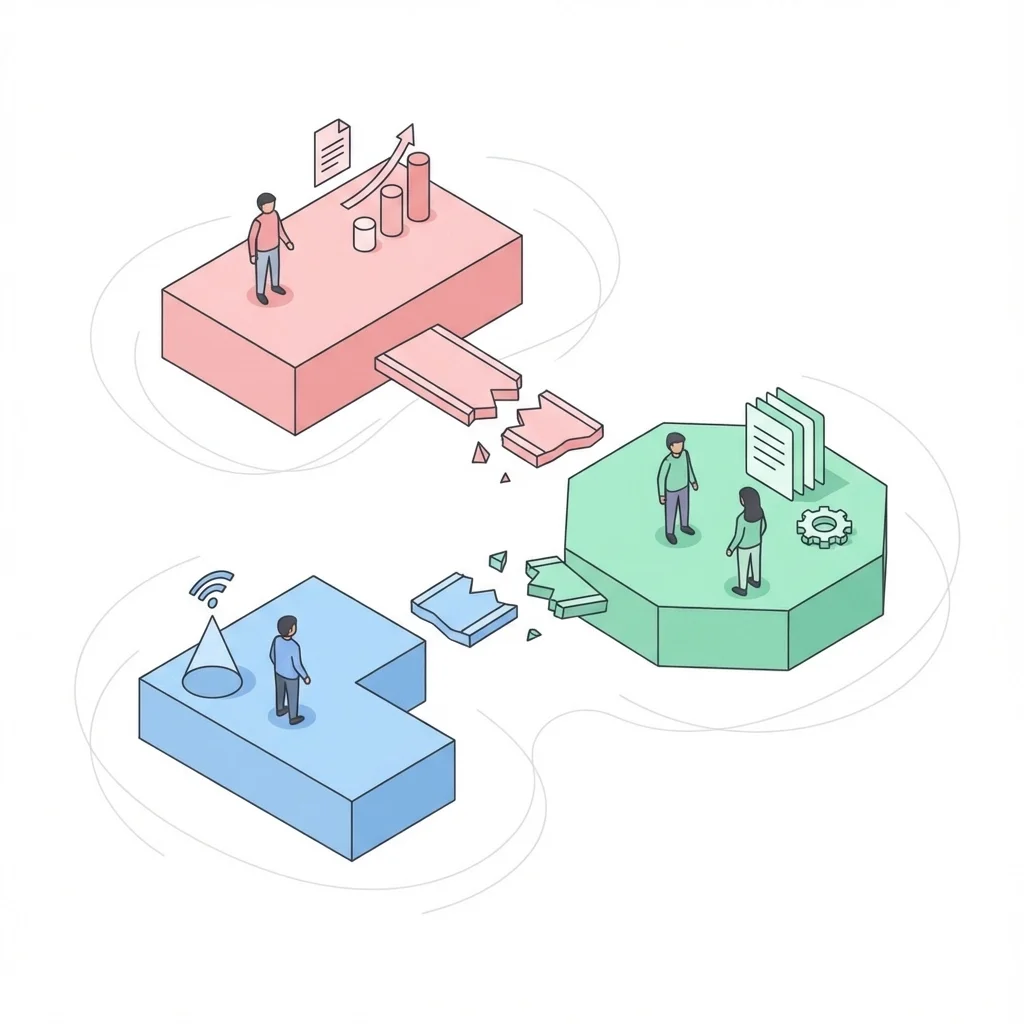
But in larger, distributed teams, these patterns become invisible. You might have employees burning out while others coast, projects bleeding money while others generate huge margins, or clients making unreasonable demands that your team accepts because "that's just how business works."
Without visibility into actual work patterns, utilization rates, and project profitability, you're essentially running your business on assumptions rather than data.
The Delegation Dilemma
Growing businesses face what we call the founder's dilemma: you know you need to delegate, but delegation feels like giving up control. And honestly? Sometimes it does mean giving up control, especially if you don't have systems in place to maintain visibility.
The problem isn't delegation itself: it's blind delegation. When you hand off responsibilities without maintaining insight into outcomes, you're not really managing anymore. You're just hoping.
Smart delegation requires creating systems that give you visibility without micromanaging. You need to see results, track progress, and identify problems early, all while giving your team the autonomy they need to do their best work.
Practical Solutions for Maintaining Visibility at Scale
The good news is that visibility problems are solvable. You just need to be intentional about creating systems that replace the natural awareness you had in smaller teams.
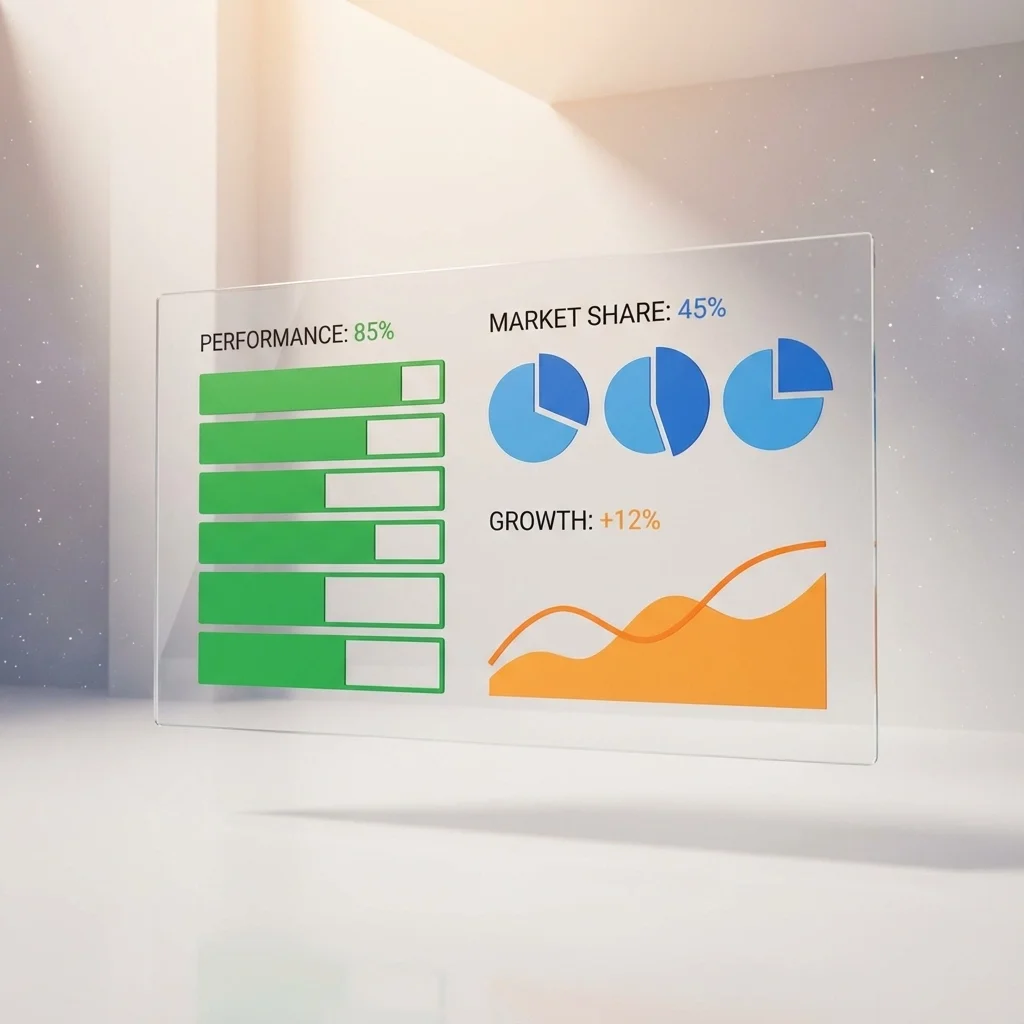
Start with standardized reporting. Not the boring monthly reports that nobody reads, but real-time dashboards that show you what's happening right now. Which projects are on track? Which team members are overloaded? Which clients are most profitable?
Implement regular one-on-ones. Not performance reviews, but brief, consistent check-ins that help you stay connected to your team's reality. Make these about problem-solving, not status updates.
Create transparent project tracking. Everyone should be able to see project status, deadlines, and resource allocation. This isn't about surveillance: it's about making sure everyone has the information they need to do their jobs well.
Establish clear escalation paths. Your team should know exactly when and how to raise issues. If problems only surface during monthly meetings, it's too late.
Use tools and routines that create natural accountability. The best systems feel effortless to your team while giving you the insights you need.
How Technology Can Help (Without Making Things Worse)
Here's where many growing businesses make a crucial mistake: they assume more software equals better visibility. They add project management tools, communication platforms, time tracking apps, and reporting dashboards until their team is drowning in digital overhead.
The key is finding tools that create visibility without creating busywork. Look for solutions that integrate with your existing workflows rather than replacing them entirely.
For service businesses, workforce management platforms can provide the visibility you need without burdening your team with additional administrative tasks. They can show you real-time project status, resource utilization, and profitability metrics while helping your team stay organized and efficient.
The goal isn't to spy on your employees: it's to create systems that help everyone succeed. When team members can see their own productivity patterns and project managers have real-time insights into resource allocation, the whole organization runs more smoothly.
The Bottom Line
Scaling feels like losing visibility because, frankly, you are losing visibility: at least the effortless kind you had when everyone sat within shouting distance of each other.
But losing natural visibility doesn't mean you have to run your business blind. It just means you need to be intentional about creating systems that give you the insights you need while preserving the autonomy and trust that made your team successful in the first place.
The companies that scale successfully aren't the ones with the most sophisticated systems: they're the ones that create simple, consistent processes for staying connected to what's actually happening in their business.
Your business doesn't have to feel harder just because it's bigger. It just needs to work differently.