Maximizing Mobile Workforce Productivity

Managing a mobile workforce is a bit like herding cats: except the cats are driving trucks, have their own schedules, and occasionally forget to log their hours. When your team is spread across multiple job sites, keeping everyone productive becomes a whole different ball game.
The good news? You don't need to clone yourself to keep things running smoothly. With the right approach (and the right tools), you can boost productivity without micromanaging every minute of the day. Let's talk about how to make that happen.
The Paper Trail Problem
Here's a scenario that might sound familiar: It's Friday afternoon, and you're trying to piece together everyone's hours from a stack of crumpled timesheets. Half of them are illegible. One guy forgot to write down which job site he was at on Tuesday. And someone definitely made up their lunch break times because there's no way anyone takes exactly 30 minutes every single day.
Paper-based systems worked fine when businesses were smaller and simpler. But when you've got crews bouncing between locations, paper becomes a productivity black hole. Time gets wasted filling out forms, chasing down missing info, and manually entering data into spreadsheets.
The shift from paper to digital isn't just about going paperless for the sake of it. It's about reclaiming hours of administrative work every week. When your crew can clock in from their phones with a few taps, you eliminate the guesswork and the "creative writing" that sometimes happens on paper timesheets.
If you're still on the fence about making the switch, check out our breakdown of paper timesheets vs. digital time tracking. Spoiler alert: digital wins by a landslide.

Real-Time Data: Your Early Warning System
Ever had a project go sideways and not found out until it was too late to fix it? That's what happens when you're flying blind. Without real-time visibility into what's happening in the field, small problems snowball into expensive disasters.
Real-time data changes the game. When you can see who's on which job site, how long tasks are taking, and where delays are popping up, you can actually do something about it before things get out of hand.
Think of it like the dashboard in your car. You wouldn't drive cross-country without knowing your fuel level, speed, or engine temperature. So why run a mobile workforce without similar visibility?
Here's what real-time tracking helps you catch early:
Overtime creep – Spot when hours are piling up before the paycheck shock hits
Job site bottlenecks – See which locations are eating up more time than expected
Scheduling conflicts – Know when someone's running behind before they're supposed to be at the next job
No-shows and late arrivals – Address attendance issues the same day, not a week later
When you've got this kind of visibility, you can make better decisions on the fly instead of reacting to problems after the damage is done.
Let the Tech Do the Tracking
Here's a truth bomb: your crew didn't sign up to be data entry specialists. They signed up to do the actual work: whether that's fixing HVAC units, landscaping properties, or managing construction sites. Every minute they spend fiddling with paperwork or clunky systems is a minute they're not doing what they're good at.
The best productivity boost you can give your mobile team is getting out of their way. And that means automating the tracking stuff so it happens in the background.
With tools like Labor Sync, time tracking becomes almost invisible. Crew members clock in when they arrive at a job site, clock out when they leave, and the system handles the rest. GPS verification confirms they were where they said they were. Job codes get assigned automatically. Hours flow straight into payroll without anyone re-typing numbers.
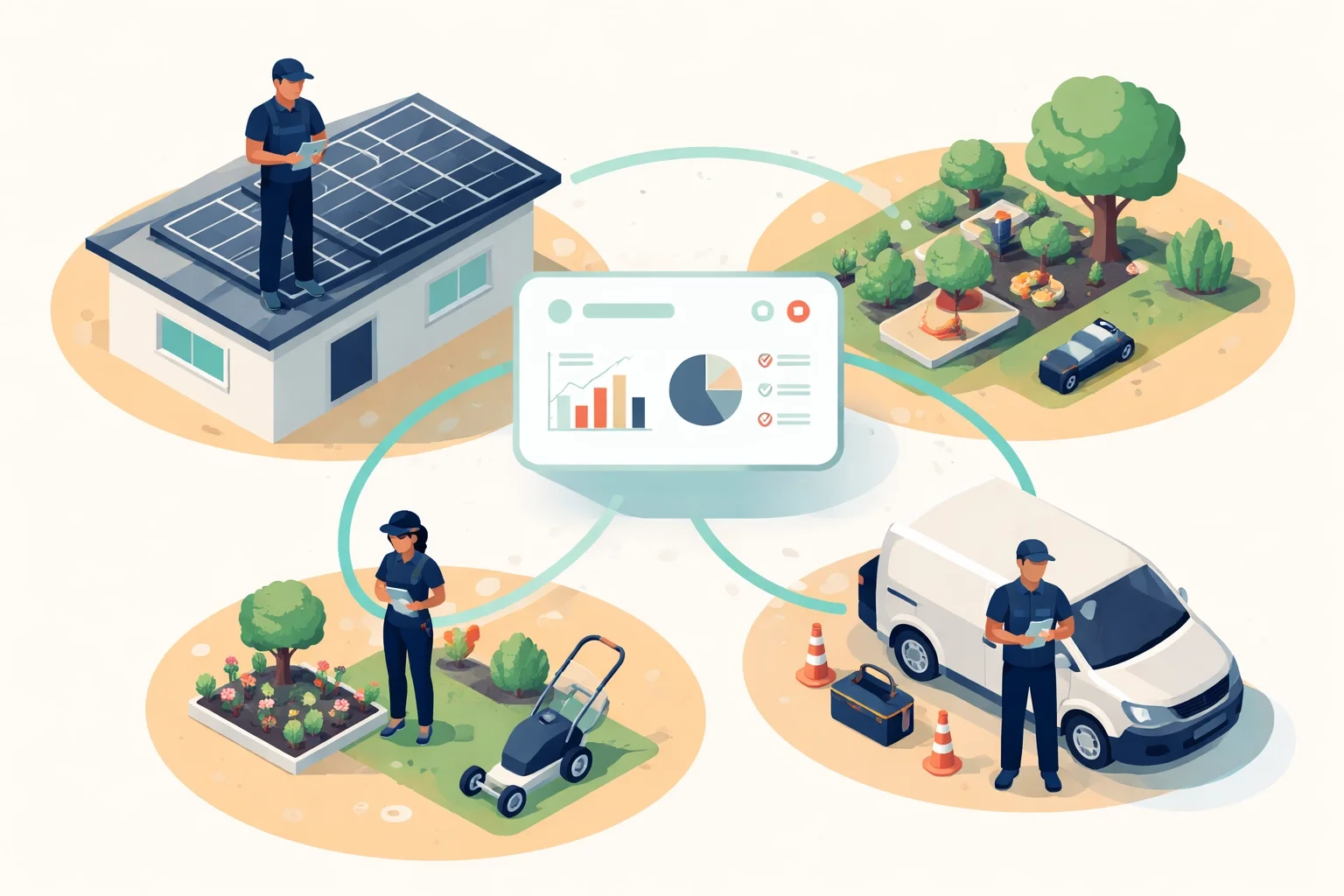
This isn't about surveillance or Big Brother watching every move. It's about removing friction. When the administrative stuff takes care of itself, your people can focus on the work that actually moves the needle.
And honestly? Most field workers prefer it this way. Nobody enjoys paperwork. Give them a simple app that takes five seconds to use, and they'll thank you for it.
The ROI of Better Visibility
Let's talk money, because that's ultimately what this is about. Productivity improvements sound nice in theory, but what do they actually mean for your bottom line?
Here's where better visibility pays off:
Reduced Time Theft and Buddy Punching
We're not saying your crew is dishonest. But let's be real: when there's no accountability, small shortcuts happen. Someone clocks in five minutes early while they're still grabbing coffee. A buddy punches in for a coworker who's running late. It adds up fast.
GPS-verified time tracking eliminates these gray areas. Not in a punitive way, but in a "let's all play by the same rules" way. Fair systems actually improve morale because everyone knows the rules apply equally. We wrote more about this in our post on fairness as the foundation of team morale.
Fewer Payroll Errors
Manual data entry means manual errors. Transposed numbers, missed hours, duplicate entries: every mistake costs time to fix and erodes trust with your team. When tracking is automated, the numbers are right the first time.
Smarter Scheduling
When you can see how long jobs actually take versus how long you estimated, you get better at scheduling over time. That means less downtime between jobs, fewer rushed endings, and more realistic promises to customers.
Catching Profit Leaks
Sometimes profits disappear without anyone noticing. A job that should take four hours consistently takes six. Travel time between sites eats into billable work. Materials get used inefficiently. Without data, these leaks are invisible. With data, you can plug them.

Practical Steps to Boost Mobile Productivity
Ready to put this into action? Here's a roadmap that doesn't require a massive overhaul:
Start with Time Tracking
If you're still on paper or using a cobbled-together spreadsheet system, make digital time tracking your first move. It's the foundation everything else builds on. Labor Sync makes this painless: your crew downloads an app, and they're ready to go.
Set Clear Expectations
Your field workers need to know what "productive" looks like. That doesn't mean micromanaging every task, but it does mean being clear about priorities, timelines, and communication expectations. Strong crew leader habits trickle down to the whole team.
Review Data Weekly
Data is useless if nobody looks at it. Set aside 30 minutes each week to review time reports, spot trends, and identify issues. You'll be amazed what patterns emerge when you actually pay attention.
Communicate in Real-Time
Ditch the "I'll tell them tomorrow" mentality. When schedules change or issues come up, your team needs to know immediately. Use your workforce management platform to push updates so everyone stays on the same page.
Adjust for Seasons
If your business has busy seasons and slow periods, your systems need to flex accordingly. What works in summer might not work in winter. We've got a whole post on how seasonal work exposes weak systems if you want to dig deeper.
The Bottom Line
Maximizing mobile workforce productivity isn't about squeezing more work out of your crew. It's about removing the obstacles that slow them down, giving them tools that actually help, and making decisions based on real information instead of gut feelings.
The transition from paper to digital, the investment in real-time visibility, the automation of tedious tracking tasks: these aren't just nice-to-haves anymore. They're table stakes for running a competitive field service business.
Your crew wants to do good work. Your job is to make that as easy as possible. Start there, and the productivity gains will follow.