Building Trust and Productivity on the Move

Let's talk about the elephant on the jobsite: nobody wants to feel like they're being watched.
If you're running a mobile crew, whether it's construction, landscaping, HVAC, or any field-based work, you've probably wrestled with this tension. You need to know what's happening out there. Your team needs to feel trusted. And somewhere in the middle is this uncomfortable question: how do you track work without becoming that boss?
Here's the thing: transparency isn't micromanagement. It's actually the opposite. When everyone can see the same information, where people are, what they're working on, when they clocked in, it removes the guesswork and the suspicion. Trust doesn't grow in the dark. It grows when expectations are clear and the data backs up what everyone already knows: your crew is working hard.
Why Tracking Gets a Bad Rap
The word "tracking" makes people nervous, and for good reason. It conjures images of helicopter managers refreshing GPS screens every five minutes or sending passive-aggressive texts about someone's lunch break. That's not management. That's paranoia with a smartphone.
But here's what tracking should be: a clear, honest record of the work that's happening. When done right, it protects everyone. Your crew gets credit for every minute they put in. You get visibility into whether projects are on schedule. And when something goes sideways, whether it's a payroll question, a safety incident, or a client dispute, you've got facts instead of fuzzy memories.
The problem isn't the data. It's how you use it.
The Real Purpose of Transparency
Think about the last time you had a disagreement about hours worked. Maybe someone swore they were there at 7 AM, but you could've sworn it was closer to 8. Or maybe you had to estimate hours for a crew at the end of the week because nobody wrote anything down.
These aren't trust issues, they're system issues. And they create friction that eats away at morale faster than any GPS tracker ever could.
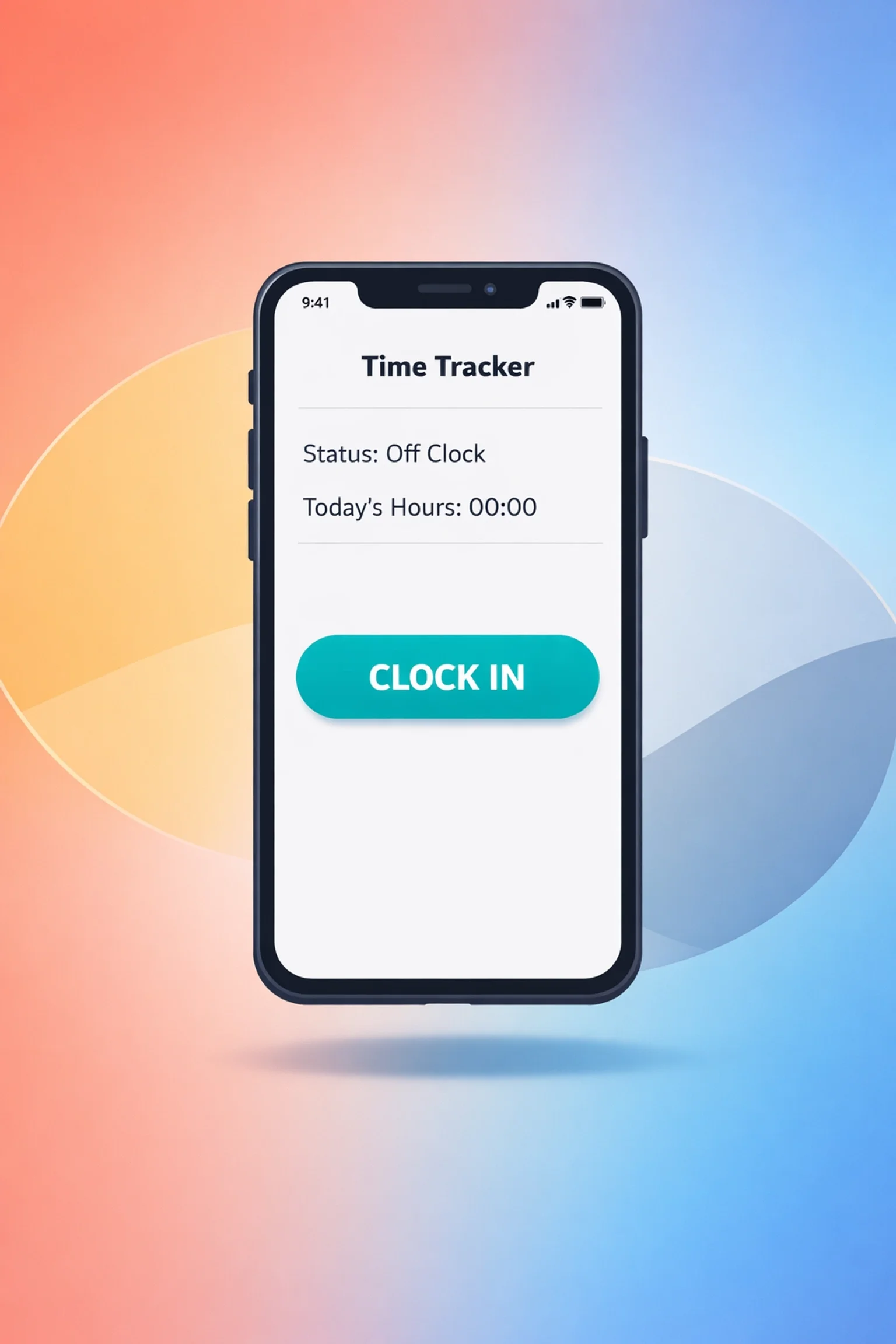
When you've got a tool that automatically logs when people arrive on site, clock in, and move between jobs, you're not spying. You're creating a shared record that everyone can rely on. Your crew doesn't have to worry about whether they'll get paid for that extra hour. You don't have to worry about whether someone's padding their timesheet. Everyone just... knows.
That's not Big Brother. That's basic fairness.
Trust Grows When Expectations Are Clear
Here's a truth bomb: unclear expectations create way more problems than any tracking system ever will.
When your crew doesn't know exactly what's expected, when job start times are vague, when project scopes keep shifting, when nobody's sure who's responsible for what, that's when people start feeling micromanaged. Because you end up having to ask a thousand questions just to figure out what's actually happening.
Clear data fixes this. When everyone can see the schedule, the job assignments, and the time records, there's less room for confusion. Your team knows what they're supposed to be doing. You know whether things are on track. And nobody has to play detective.
We've talked before about how vague instructions create downstream chaos. The same principle applies here. The clearer your systems are upfront, the less you have to get in the weeds later.
The Safety Angle Nobody Talks About
Here's something that doesn't get enough attention: transparency isn't just about productivity. It's about safety.
When you've got a mobile crew spread across multiple sites, knowing where everyone is isn't paranoia, it's basic duty of care. If someone gets hurt, if equipment fails, if there's an emergency, you need to know who's where and how to reach them fast.
A good tracking system gives you that peace of mind without making your crew feel like they're on house arrest. They clock in at the site, you can see they're there, and everyone moves on with their day. If something happens, you're not scrambling through texts and voicemails trying to figure out who was at which location.
This is especially important in industries like construction or HVAC, where job sites can be hazardous and response time matters.
Accurate Pay Is Trust in Action
Let's get practical for a second. One of the biggest trust-killers in any field business is payroll mistakes.
Your crew works hard. They deserve to get paid accurately for every minute, including drive time, overtime, and those weird half-hours between jobs. When timesheets are manual and somebody has to reconstruct the week from memory, mistakes happen. And even when those mistakes are honest, they feel terrible.
"Did I really only work 38 hours last week? I could've sworn it was more."
When you've got automated time tracking that logs everything in real-time, those conversations disappear. The data is right there. Your crew can see it. You can see it. Payroll is clean. Nobody feels shortchanged, and nobody has to have awkward conversations about whether someone was "really" working during that job transition.
This ties directly into fairness being the foundation of team morale. When people trust that they're getting paid fairly, they show up differently. They care more. They stick around longer.
The Middle Ground: Accountability Without Hovering
So how do you actually do this? How do you use tracking tools without sliding into micromanagement territory?
First, set the right expectations from the start. Make it clear that the system exists to create accurate records and protect everyone, not to catch people slacking off. When your crew understands that the data works for them as much as for you, they're way more likely to embrace it.
Second, focus on outcomes, not minute-by-minute activity. Yeah, you can see when someone clocked in. But what you're really measuring is whether the job got done, whether the client is happy, and whether the crew is working safely. The time data is there to support those bigger goals: not to become the goal itself.
Third, use the data to solve problems, not assign blame. If you notice someone's consistently running behind schedule, that's not a reason to jump down their throat. It's a reason to ask what's going on. Maybe the job scope was wrong. Maybe they need better tools or training. Maybe there's a system problem you haven't noticed yet.
Fourth, be transparent yourself. If you're asking your crew to clock in and log their time, make sure you're also clear about how you're using that data. Share insights about productivity, job costs, and project timelines. When your team sees that the information is helping everyone make better decisions: not just helping you keep tabs on them: they're much more likely to buy in.
When Trust and Data Work Together
The most productive mobile teams aren't the ones with the strictest oversight or the loosest reins. They're the ones where trust and transparency work together.
Your crew trusts that you'll pay them fairly, keep them safe, and give them the tools they need to do good work. You trust that they're professionals who take their jobs seriously. And the data simply confirms what everyone already knows: work is getting done, people are showing up, and the business is running smoothly.
This is what we've seen work in industries from landscaping to plumbing: when the system removes friction instead of adding it, everyone wins. You get better visibility to make better decisions, and your crew gets the recognition and fair pay they deserve.
The Bottom Line
Building trust with a mobile workforce isn't about tracking less or tracking more. It's about tracking transparently.
When everyone has access to the same clear, honest data: when time records are automatic, when expectations are spelled out, when the information is used to solve problems instead of assign blame: trust actually grows. Your crew feels respected. You feel confident. And the whole operation runs smoother.
Look, nobody goes into field work because they love timesheets and GPS logs. But when those tools fade into the background and just work: when they make payday easier and safety better and scheduling clearer: they stop being "tracking" and start being just... how things get done.
That's the goal. Not Big Brother watching over everyone's shoulder. Just a clear, honest system that backs up what your crew already knows: they're doing great work, and they're getting credit for every minute of it.