Why Your Business Feels Harder Than It Should

You're not imagining it. Running a business in 2025 genuinely feels harder than it used to. While your parents might have launched companies with a handshake, a Yellow Pages ad, and basic bookkeeping, today's business owners juggle an unprecedented mix of challenges that didn't exist even five years ago.
The truth is, you're navigating economic headwinds, technological disruption, talent shortages, and regulatory complexity all at the same time. It's like trying to solve a Rubik's cube while riding a unicycle in a windstorm. Let's break down exactly why business feels so much harder right now: and what you can actually do about it.
Related Podcast: Episode 58: Why Your Business Feels Harder Than It Should
The Economic Perfect Storm
Inflation isn't just a number on the news: it's eating your margins alive. Rising costs for everything from materials to office supplies force impossible choices: raise prices and risk losing customers, or absorb costs and watch profits disappear. Meanwhile, your customers are dealing with the same squeeze, making them pickier about where they spend.
Market saturation makes differentiation nearly impossible. Every niche seems crowded with competitors offering similar services at razor-thin margins. What marketing experts call the "red ocean" effect means you're constantly fighting for the same customers instead of finding untapped opportunities.
What you can do: Focus on operational efficiency rather than just cutting costs. Small improvements in how you track time, manage projects, and handle scheduling can add up to significant savings. Sometimes the solution isn't working harder: it's working smarter.

Technology: Friend or Foe?
Artificial intelligence isn't just coming: it's already reshaping how business gets done. Forty-three percent of organizations identify AI integration as a critical challenge, and if you're not adapting, you're falling behind competitors who are.
But here's the catch: every new technology requires time, money, and mental bandwidth to implement properly. You need cybersecurity measures (47% of businesses cite this as their top concern), data privacy compliance, digital payment systems, and automation tools. Each solution promises to make life easier, but learning and maintaining them often feels like a full-time job.
The reality check: You don't need to adopt every new technology. Pick tools that solve specific problems you're actually experiencing. If manual time tracking is costing you hours each week, start there. If communication with field crews is chaotic, tackle that next. Technology should reduce complexity, not add to it.
The Talent Tightrope
Finding good people has become a contact sport. You're competing against corporations offering better benefits and gig economy platforms offering more flexibility. The skills shortage means qualified candidates have multiple options, while you're trying to balance competitive pay with sustainable business costs.
Even when you find great employees, keeping them requires investment in training, professional development, and company culture. Remote work expectations, flexible schedules, and work-life balance aren't just nice-to-haves anymore: they're requirements for attracting talent.
Smart approach: Instead of trying to compete dollar-for-dollar with bigger companies, focus on what you can offer that they can't: meaningful work, direct impact, and growth opportunities. As we discussed in great team-building ideas that get overlooked, sometimes the best retention strategies cost more time than money.
The Compliance Maze
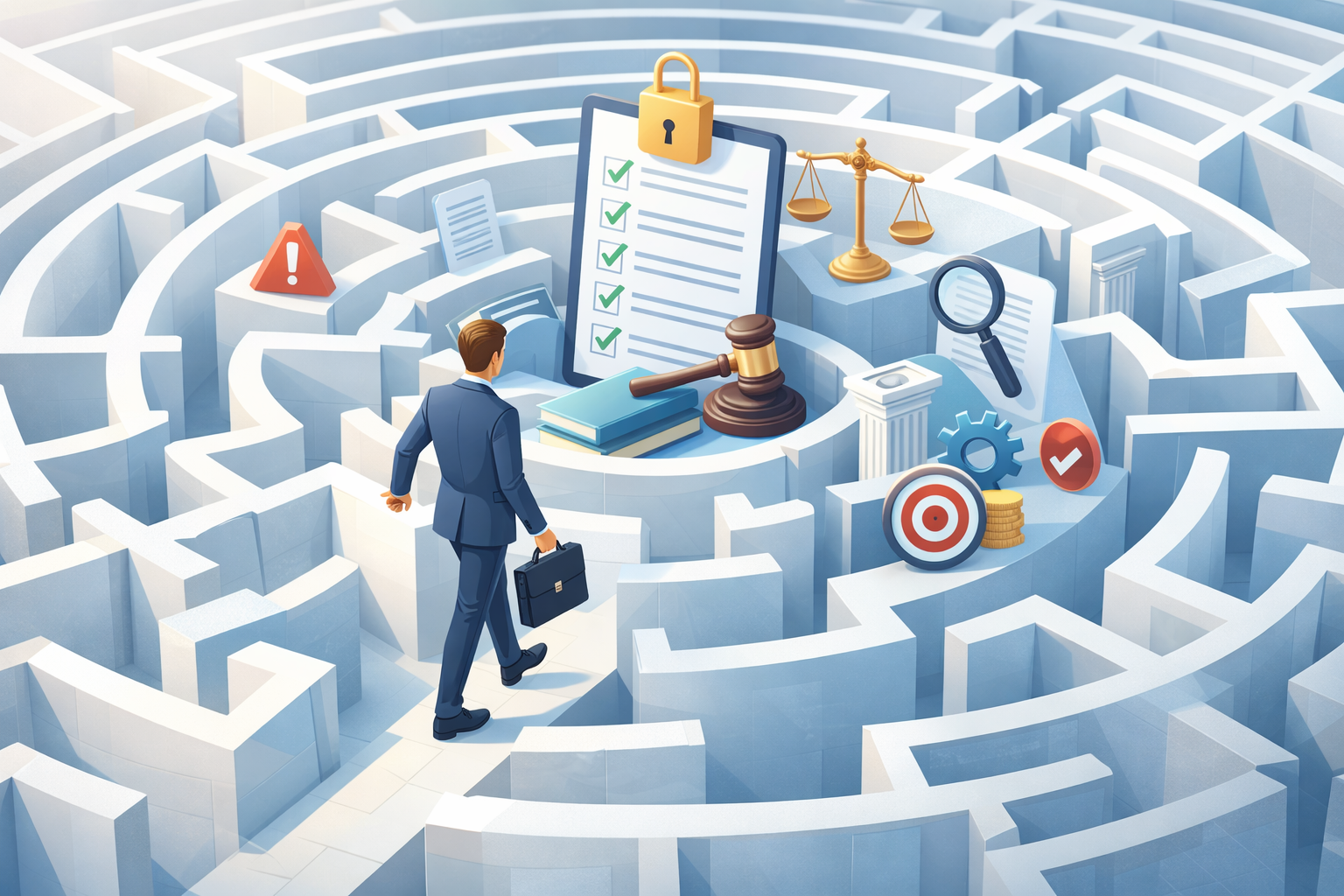
Environmental regulations, data privacy laws, workplace safety requirements, and tax obligations create a compliance maze that grows more complex every year. Each new rule requires understanding, implementation, and ongoing monitoring. Get it wrong, and you face fines, legal issues, or reputation damage.
For many small business owners, staying compliant feels like studying for an exam that never ends. The worst part? These requirements often seem designed for companies with dedicated legal and HR departments, not solo entrepreneurs or small teams.
Practical solution: Don't try to become an expert in everything. Identify your highest-risk compliance areas and get professional help for those. Use simple tools and systems to document what you're doing: it's easier to prove compliance when you have records. Consider how better organizational habits and routines can make compliance less overwhelming.
The Planning Paradox
Strategic planning used to involve looking at last year's numbers and adding 10%. Now, geopolitical instability, supply chain disruptions, and economic uncertainty make forecasting feel like guessing. Less than 30% of business leaders feel prepared for trade disruptions, and fewer than one in ten feel fully confident in their company's financial health.
This uncertainty makes every decision harder. Should you hire that extra person? Invest in new equipment? Expand to new markets? When the future feels unpredictable, it's tempting to freeze up and make no decisions at all.
Breaking the paralysis: Focus on building flexibility rather than perfect predictions. Make smaller bets instead of big gambles. Create systems that can scale up or down based on demand. Having good processes for handling both growth and setbacks matters more than having the perfect five-year plan.
The Attention Overload
Modern business ownership means constant context switching. You're the CEO, head of sales, customer service manager, and IT department all in one day. Each role requires different skills and mindset, and switching between them exhausts mental energy faster than doing any single job well.
Add in the need to stay current with industry trends, manage social media, respond to emails, and keep up with administrative tasks, and it's no wonder many business owners feel like they're drowning in their own success. As we explored in the silent productivity killers at work, the real problem isn't lack of time: it's lack of focused attention.

The fix: Batch similar activities together and protect dedicated time for deep work. If you're constantly switching between fieldwork supervision, customer calls, and administrative tasks, you're burning energy on transitions rather than results. Simple time tracking can reveal where your attention actually goes versus where you think it goes.
The Real Solution: Systems Over Struggles
Here's the truth most business advice misses: the solution isn't working harder or being more resilient. It's building systems that handle complexity automatically so you can focus on what actually grows your business.
When time tracking becomes effortless, you get accurate project costs without micromanaging. When crew communication is systematic, you spend less time putting out fires and more time planning ahead. When client management has clear processes, you avoid the stress of dealing with clients who stop calling back.
The businesses that thrive in this complex environment aren't the ones with superhuman owners: they're the ones with smart systems that remove friction from daily operations.
Your Next Steps
Business feels harder because it genuinely is harder. But that doesn't mean you're stuck. Start with one area where manual processes are consuming too much of your time or mental energy. Fix that, then move to the next bottleneck.
The goal isn't to eliminate all challenges: it's to handle them efficiently enough that you can focus on growing your business instead of just surviving it. Whether that's streamlining how you track employee hours, improving communication with field crews, or getting better visibility into project costs, small improvements in the right areas create outsized results.
Remember: every successful business owner is dealing with the same fundamental challenges. The difference is having systems that handle the complexity so you can focus on what matters most: serving your customers and growing your company.