Eliminating Inefficiencies in Field Operations

Let's be honest, running field operations sometimes feels like herding cats. Except the cats are spread across multiple job sites, some forgot to clock in, and nobody knows who has the van with the ladder.
If your day involves more firefighting than actual productive work, you're not alone. Field operations are messy by nature. People are moving, jobs are changing, and there are about a thousand little things that can (and will) go wrong. But here's the thing: most of those headaches aren't just "part of the business." They're inefficiencies that are quietly draining your time, money, and sanity.
The good news? You can fix them. Let's talk about how.
The Usual Suspects: Where Field Operations Break Down
Before you can fix something, you've got to name it. So let's call out the biggest culprits that turn smooth operations into a daily scramble.
Inefficient Routing
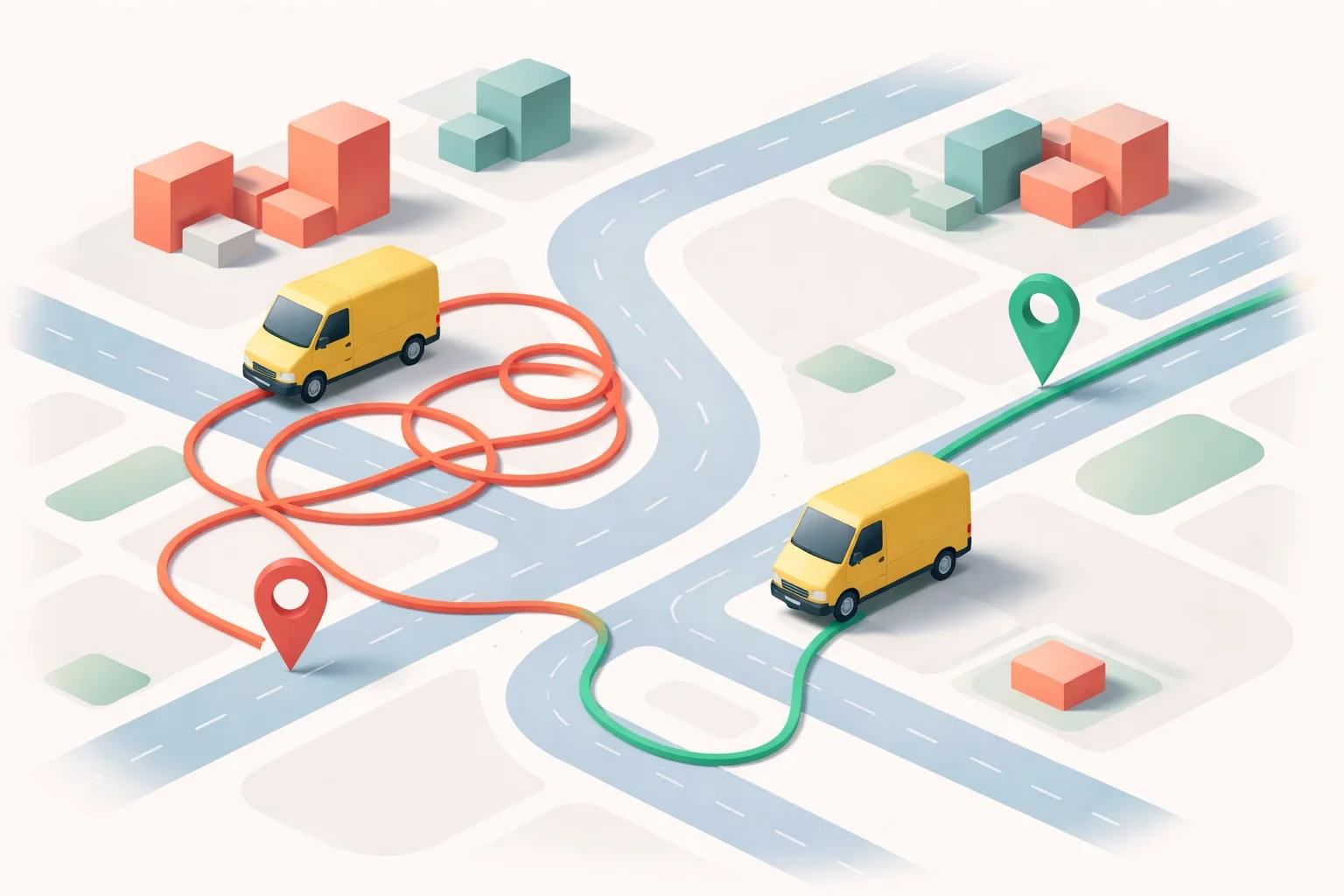
Your crew starts the day, and their first job is 20 minutes north. The second job? 45 minutes south. Third job? Back north again. By lunchtime, they've spent more time behind the wheel than actually working.
Inefficient routing isn't just annoying, it's expensive. Fuel costs add up. Wear and tear on vehicles adds up. And every hour spent driving is an hour not spent completing jobs. Studies show that optimized routing can cut travel time by 25-35% and boost daily job completion by 20-40%. That's not pocket change.
If your scheduling process involves a whiteboard, sticky notes, or "whoever's closest," there's a lot of room for improvement.
Manual Clock-Ins and Paper Timesheets
Ah, the paper timesheet. A classic. Also a disaster waiting to happen.
Manual clock-ins are slow, error-prone, and basically an open invitation for time theft (intentional or not). Was that 7:58 or 8:28? Who knows, the handwriting is illegible. And don't even get started on the end-of-week scramble where everyone tries to remember what they did on Tuesday.
If you're still dealing with paper timesheets, you might want to check out our breakdown of paper timesheets vs. digital time tracking. Spoiler: digital wins by a mile.
Lack of Real-Time Job Site Visibility
Here's a fun game: try to answer these questions right now without making a phone call.
Where is your crew?
Are they on schedule?
Did they finish the last job?
Are they stuck waiting for parts?
If you can't answer those instantly, you've got a visibility problem. And that problem creates a ripple effect. Customers call asking for updates. You call your crew. They don't answer because they're working. You stress. They stress. Everyone's frustrated.
Without real-time visibility, you're basically flying blind, and that makes better decisions nearly impossible.
Communication Breakdowns
"I thought you said the job was on Oak Street."
"No, I said Park Street."
"Well, I'm on Oak Street."
Sound familiar? Poor communication between the office and the field creates delays, mistakes, and a whole lot of unnecessary back-and-forth. When instructions are vague or updates get lost, jobs take longer, quality suffers, and your reputation takes a hit.
We've written before about how vague instructions create downstream chaos. It's worth a read if you want to see just how much damage a simple miscommunication can cause.

The Real Cost of These Inefficiencies
Here's where it gets serious. These aren't just minor annoyances, they're actively costing you money.
Every extra mile driven is fuel and maintenance you didn't need to pay for. Every timesheet error is payroll you're overpaying (or disputes you're dealing with). Every missed update is a customer who might not call you back next time.
And the sneaky part? These costs are often invisible. They don't show up as a single line item on your budget. They just quietly chip away at your margins until one day you're wondering why your profits keep disappearing.
When you add it all up, wasted labor hours, fuel, customer churn, administrative overhead, inefficiencies can easily eat 10-20% of your operational costs. For most field service businesses, that's the difference between thriving and barely getting by.
Cleaning Up the Mess: Practical Steps to Streamline Operations
Alright, enough doom and gloom. Let's talk solutions. The goal here is simple: remove the friction, automate the busywork, and give everyone the information they need when they need it.
Get Smart About Scheduling and Routing
Stop doing this manually. Seriously. Modern scheduling tools can factor in technician skills, location, job requirements, and even real-time traffic to create optimized routes automatically.
The result? Less windshield time, more wrench time. Your crews get more done, customers get faster service, and you stop burning money on unnecessary miles.
Labor Sync makes this easy with GPS tracking and smart scheduling features that help you see where everyone is and plan routes that actually make sense.
Ditch the Paper (For Real This Time)
Digital time tracking isn't just more accurate: it's faster, easier, and way less annoying for everyone involved.
With mobile clock-ins, your crew can punch in and out from their phones with GPS verification. No more guessing, no more deciphering chicken-scratch handwriting, no more end-of-week timesheet archaeology. You get accurate hours in real time, and payroll becomes something you can actually trust.

Build Real-Time Visibility Into Everything
You shouldn't have to play phone tag to know what's happening in the field. The right tools give you a live view of job status, crew locations, and progress updates: all without interrupting anyone's work.
This isn't about micromanaging. It's about having the information you need to make smart calls, answer customer questions, and catch problems before they snowball.
When you can see what's happening in real time, you can make decisions that actually move the needle.
Streamline Communication
Centralize your job details, instructions, and updates in one place that everyone can access. When your crew has all the info they need on their phone: job specs, customer notes, site photos: they don't need to call the office every five minutes.
Clear communication also means fewer mistakes, which means fewer callbacks, which means happier customers (and happier crews). It's also a foundation for why some businesses feel harder to run than they should.
Make Continuous Improvement a Habit
Eliminating inefficiencies isn't a one-time project. It's an ongoing practice. Talk to your crews regularly: they're the ones in the field, and they'll spot problems you never knew existed.
Track your metrics. Look for patterns. If the same issues keep popping up, dig into the root cause instead of just patching symptoms. Over time, these small improvements compound into major gains.
Building reliability as a competitive advantage starts with consistently looking for ways to do things better.
The Bottom Line
Field operations will never be 100% smooth: that's just the nature of the work. But there's a big difference between occasional hiccups and systemic inefficiency that drains your resources every single day.
By tackling the big culprits: bad routing, manual processes, poor visibility, and communication gaps: you can run a tighter operation that gets more done with less stress. Your crews will be happier. Your customers will be happier. And your bottom line will thank you.
Labor Sync is built to help field service businesses clean up these exact problems. From GPS time tracking to real-time job visibility, it's designed to take the chaos out of field operations so you can focus on what actually matters: getting the work done.