Lean Construction on the Go

Toyota revolutionized manufacturing by cutting waste. They didn't make their assembly lines faster: they made them smarter. The idea was simple: find what doesn't add value, then kill it.
That approach, called Lean manufacturing, turned a struggling car company into a global powerhouse. But here's the thing nobody talks about: those same principles work for construction and field service businesses. The waste is just hiding in different places.
Instead of excess inventory piling up in a warehouse, you've got crews sitting idle at job sites. Instead of overproduction on an assembly line, you've got workers doing tasks that weren't even requested. And instead of inefficient material transport, you've got trucks crisscrossing town because nobody knew where anyone was supposed to be.
The difference? Your waste is mobile. And if you can't see it, you can't fix it.
The Seven Wastes (Field Service Edition)
Lean thinking identifies seven types of waste that kill profit margins. Let's translate them from factory floors to job sites:
Transport : Unnecessary driving between sites, forgotten tools requiring return trips, or poor route planning that sends crews zigzagging across town.
Inventory : Excess materials sitting in trucks, duplicate tool purchases because "we couldn't find the other one," or equipment that's owned but rarely used.
Motion : Workers walking back and forth to get supplies, searching for paperwork, or waiting for instructions.
Waiting : Crews standing around because the previous job ran late, materials haven't arrived, or someone's waiting on approval to start.
Overproduction : Doing more work than the client requested, gold-plating a simple repair, or spending three hours on a task that should take one.
Over-processing : Multiple people handling the same paperwork, redundant quality checks, or using complex processes when simple ones would work.
Defects : Rework due to mistakes, missed steps that require a return visit, or work that doesn't meet code and needs fixing.
Sound familiar? Most field service businesses are bleeding money in at least three of these categories, and they don't even know it. The hidden productivity killers are everywhere once you start looking.
The Big Three: Where Mobile Crews Lose Money
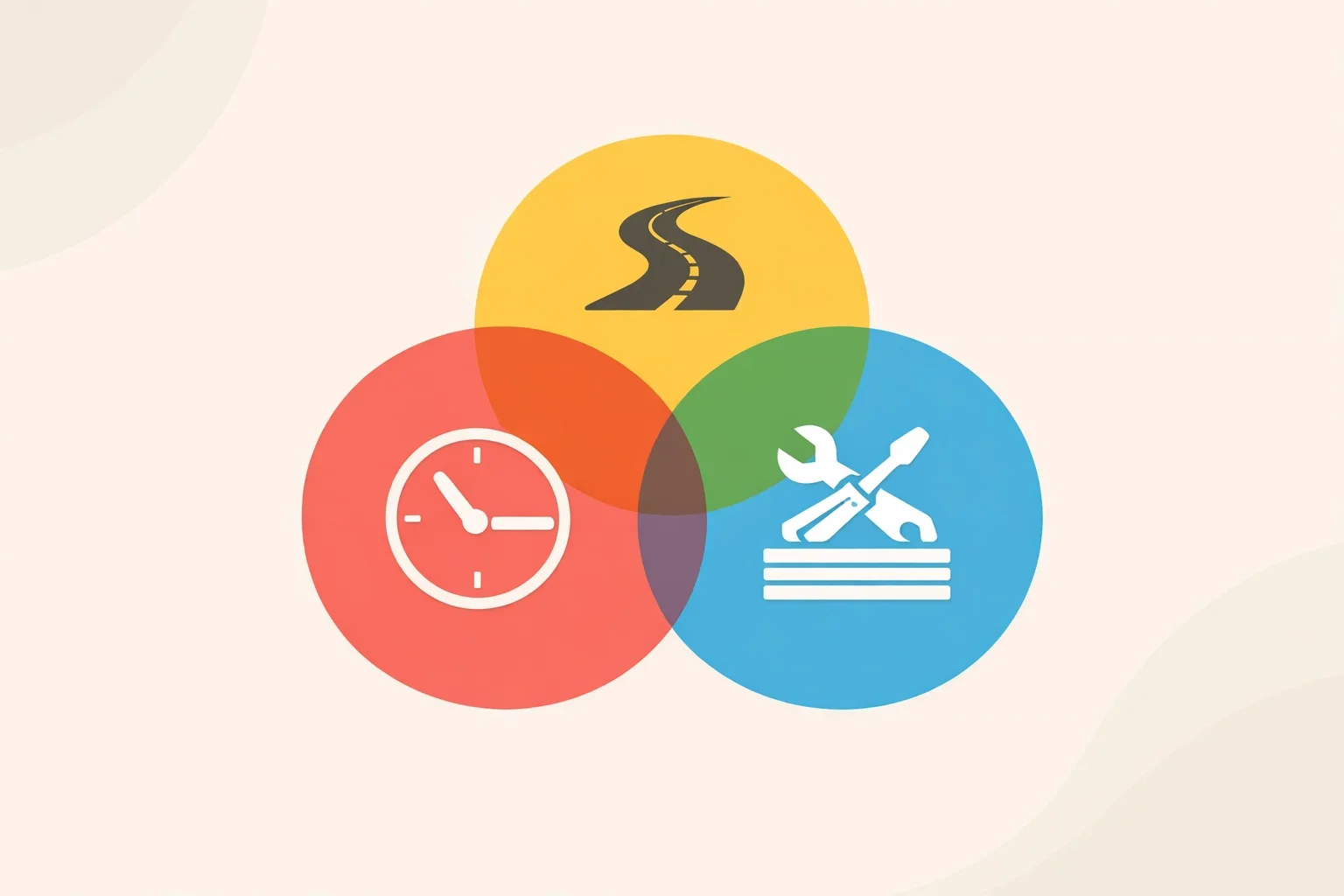
Let's zero in on the three worst offenders for field-based businesses: waiting, transport, and overproduction.
Waiting: The Silent Profit Killer
Your crew shows up at 8 AM. The gate's locked. Nobody told them the property manager changed the access code. They sit in the truck for 45 minutes until someone figures it out.
Or: Job A runs over. Job B's crew is already on site for Job C, waiting. Job C can't start until Job B finishes. Everyone's on the clock, nobody's working.
Research shows that companies using conventional planning methods spend an extra 9 hours per week just on administrative tasks: creating schedules, updating plans, distributing information. That's time that could be spent actually working. But more importantly, those delays cascade. One schedule slip creates a domino effect of crews waiting, clients frustrated, and profit margins shrinking.
The math is brutal. If you have 10 field workers and each one loses just 15 minutes per day to waiting (for instructions, materials, access, or the previous job to finish), that's 2.5 hours lost daily. Over a year? That's 650 hours of paid time producing zero value. At $30/hour loaded labor cost, you just lost $19,500. Per year. From 15 minutes.
Scale that to 25 workers? Now you're at nearly $50,000 in pure waste.
Transport: Death by a Thousand Trips
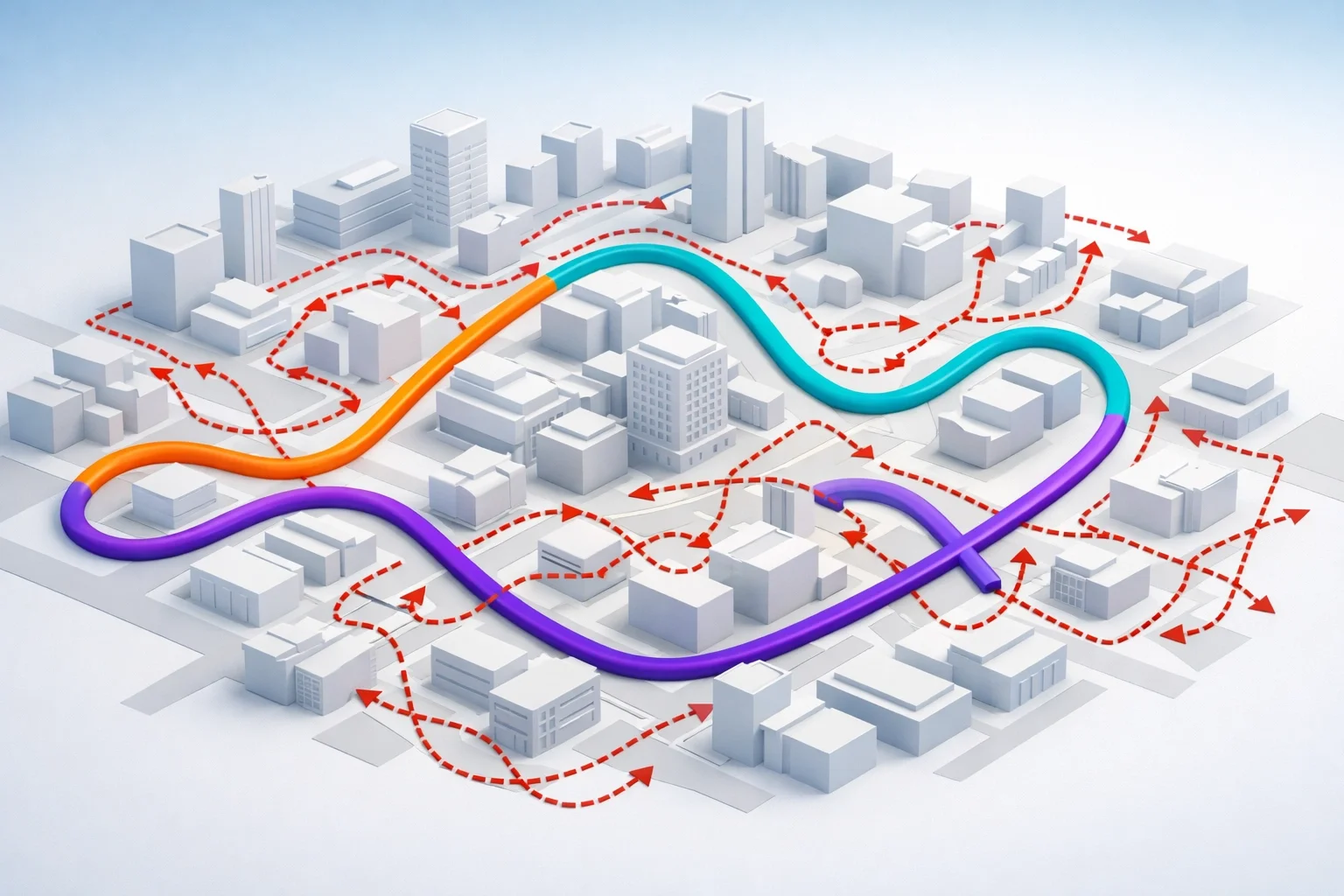
Bad routing is expensive. Your technician finishes Job A on the north side of town. Dispatch sends them to Job B on the south side. Then Job C back on the north side. They just drove an extra 40 miles for no reason.
Or worse: They get to the job site and realize they left a critical tool in the truck at the office. Round trip? Another 30 minutes burned.
One of Labor Sync's HVAC clients calculated that poor routing was costing them 90 minutes of drive time per technician, per day. With fuel costs, vehicle wear, and paid time, that was adding up to over $75,000 annually. Just from inefficient routing.
The fix wasn't rocket science: it was visibility. When managers could see where everyone was in real time, they could route the closest available technician to each job, not just the next one on a list made at 7 AM.
Overproduction: The "Might As Well" Tax
A client calls about a leaky faucet. Your plumber shows up, sees the faucet is old, and decides to replace the whole fixture "while they're there." Sounds helpful, right?
Except the client didn't authorize it. They wanted a $75 fix, not a $400 replacement. Now you're stuck eating the cost or having an awkward conversation. Either way, you wasted time and materials doing work that wasn't requested.
Or consider this: A crew finishes a job early. Instead of moving to the next one, they putter around "making sure everything's perfect" for another hour. Perfection is great. Getting paid for another job is better.
Overproduction feels like good service, but it's actually waste disguised as initiative. The goal isn't to do the most work: it's to do the right work, profitably.
The Real-Time Visibility Advantage
Here's where modern workforce management gets interesting. The factory floors that Toyota optimized were visible. Managers could walk through and see problems: a pile of excess inventory, a worker waiting for parts, a bottleneck on the line.
Your field crews? They're scattered across 50 square miles. You can't see the waste. You only hear about it later: when timesheets come in, when clients complain, or when you're wondering why jobs that should take four hours keep taking six.
Real-time visibility changes everything. When you can see:
Where each crew is right now
How long they've been at each job site
Whether they've clocked in or are running late
Who's finishing soon and available for the next job
...you can spot waste as it's happening and fix it immediately.
Studies show teams using cloud and mobile tools report 20-40% higher completion rates for weekly work commitments. Why? Because when conditions change: and they always do: everyone gets the update instantly. No more crews showing up to sites that aren't ready. No more workers doing tasks based on outdated information that changed two hours ago.
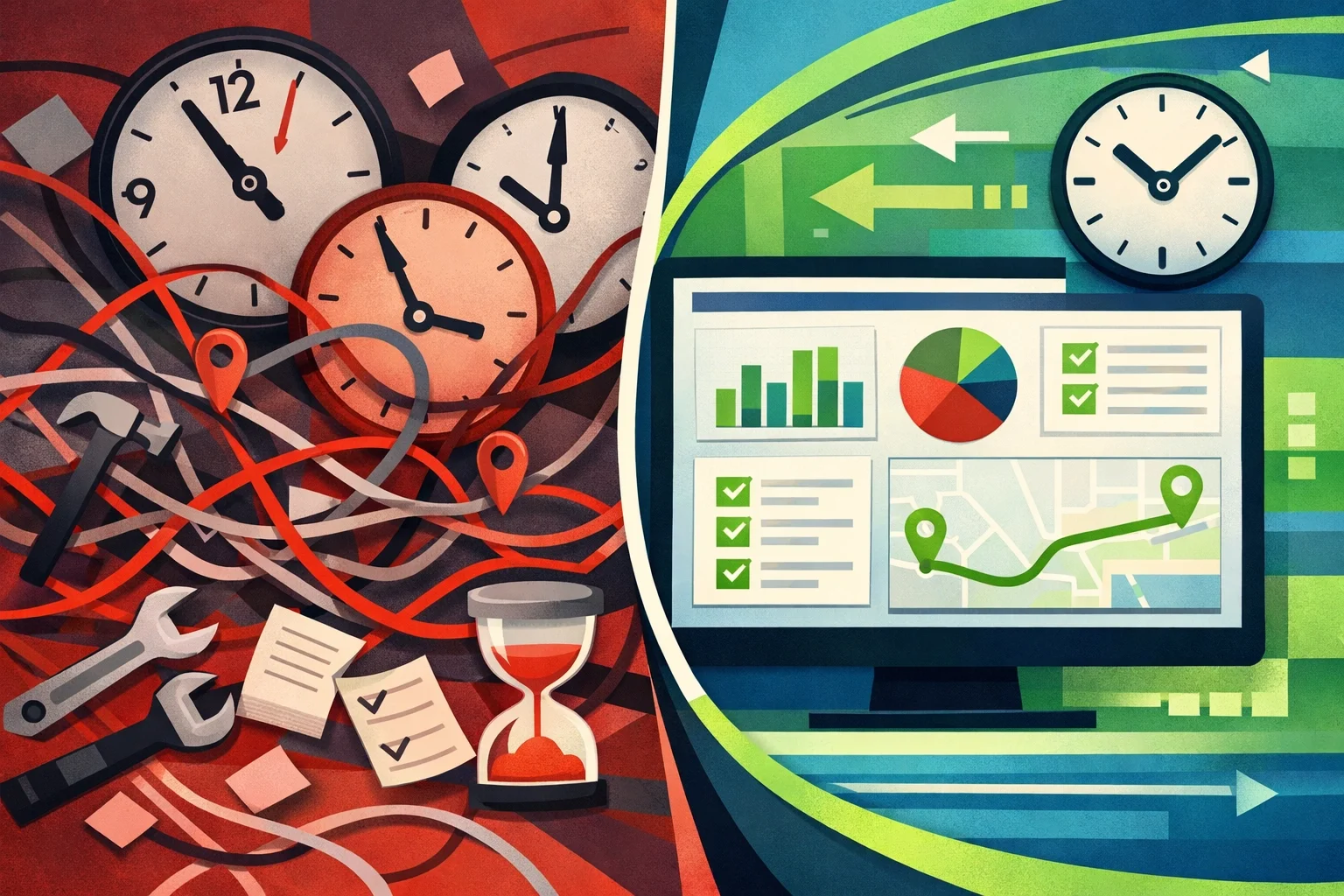
This kind of visibility is exactly what we've built into Labor Sync. Not because we love tracking people (we don't), but because you can't fix what you can't see. And most field service businesses are flying blind. Our mobile workforce productivity article dives deeper into how real-time data transforms operations.
Quick Wins: Lean Moves You Can Make Today
You don't need to overhaul your entire operation tomorrow. Start with these tactical improvements:
Morning huddles with live data : Before crews head out, review the day's schedule based on real-time information, not a plan made yesterday. Ask: "What's going to cause waiting today, and how do we prevent it?"
Track job durations : Start measuring how long tasks actually take versus estimates. You'll quickly see which jobs consistently run over and why. This is the first step to better decision-making through visibility.
Zone your work : Group jobs geographically so technicians aren't crisscrossing territory. Even simple clustering can cut drive time by 20-30%.
Set clear scope boundaries : Train crews on the difference between value-added work (what the client ordered) and waste (what seems like a good idea). If it's not on the work order, it needs approval first.
Review idle time weekly : Look at where crews spent time not actively working. Was it waiting for access? Driving? Miscommunication? You can't improve what you don't measure, and the right metrics improve field performance.
Automate schedule updates : Stop playing telephone with schedule changes. When Job A runs late, everyone affected should know immediately: not when they're already sitting in the driveway of Job B.

The Compound Effect
Here's the thing about waste: it compounds. Fifteen minutes of idle time doesn't just cost you fifteen minutes. It pushes the next job back. Which makes the crew rush. Which increases mistakes. Which leads to rework. Which eats into tomorrow's schedule.
Cutting waste doesn't just save money: it improves quality, boosts morale (nobody likes feeling inefficient), and creates capacity to take on more work without hiring more people. That's how you streamline processes and save money simultaneously.
One of our landscaping clients started tracking and reducing idle time across their 15-person crew. They found an average of 22 minutes per person per day was being wasted: mostly on waiting and poor routing. By addressing just those two categories, they effectively gained the equivalent of one full additional employee's productivity without adding headcount.
That's the power of Lean thinking in a mobile context. Toyota didn't build faster assembly lines: they removed the waste so their existing lines could perform better. You don't need more trucks or more technicians. You need to stop leaking time from the ones you have.
From Lean to Profitable
Lean construction isn't about working harder. It's about working smarter by eliminating the activities that cost money but don't create value. For mobile workforces, that means building systems that give you visibility into where time is being wasted: and then giving you the tools to fix it.
The relationship between overtime and output is a great example: more hours don't always equal more profit if those hours are filled with waste.
Labor Sync exists to give field service businesses the same advantages that manufacturers have had for decades: real-time visibility, data-driven decisions, and the ability to spot problems before they become expensive. It's not magic. It's just finally being able to see what's been costing you money all along.