You Can Only Improve What You Measure
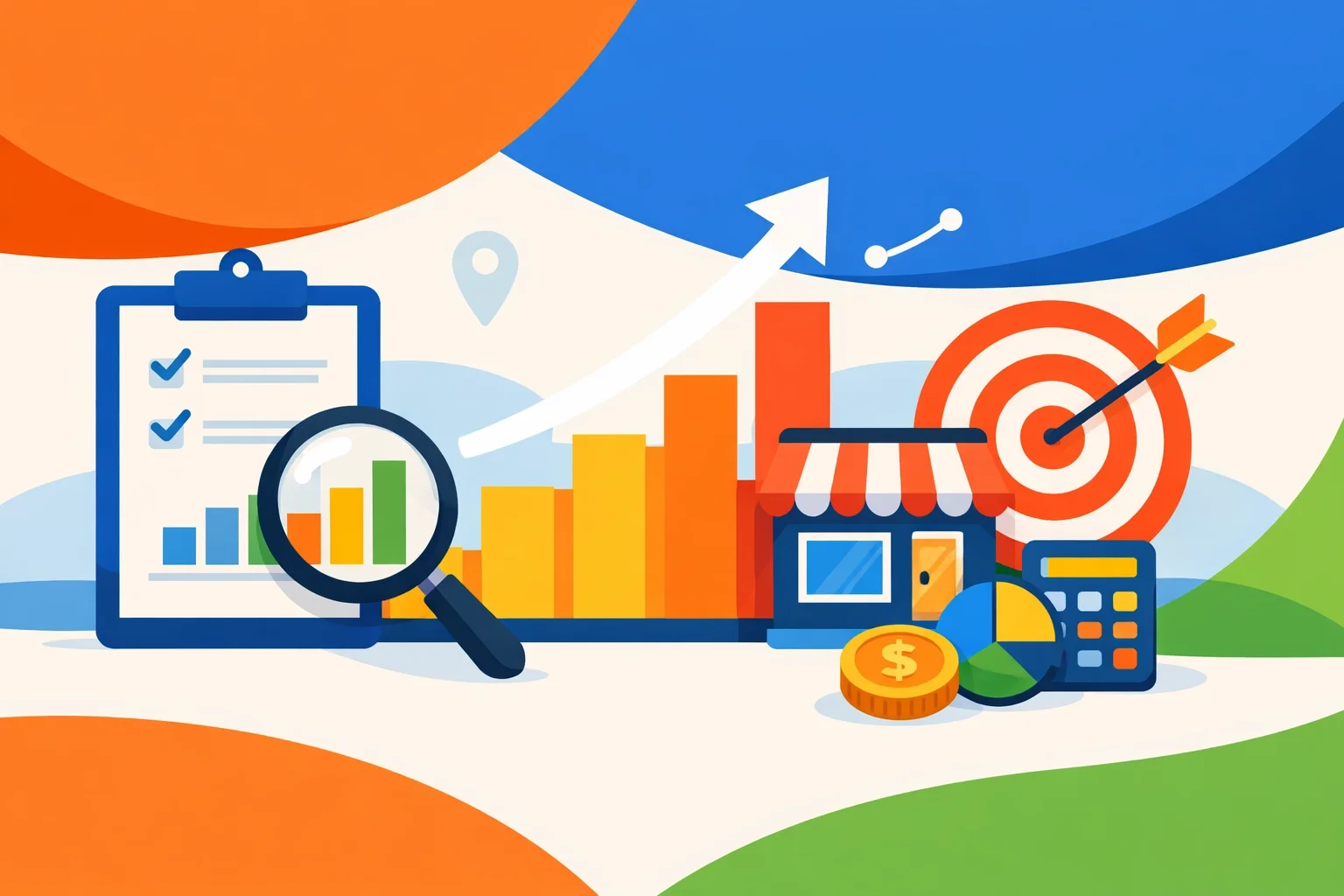
Ask any small business owner how things are going, and you’ll usually get a response based on a "feeling."
"We’re busy," they’ll say. Or, "The guys seem to be working hard." Sometimes, it's more ominous: "I feel like we should be making more money than we are."
The problem with "feeling" your way through a business is that feelings are notoriously unreliable. You might feel like your crew is efficient because you see them moving fast when you drop by the site. But if you don’t know that they spent two hours stuck in traffic or forty-five minutes looking for a specialized tool that should have been on the truck, your "feeling" is lying to you.
The hard truth of scaling a business is simple: You can only improve what you measure. If you aren't tracking the minutes, the miles, and the man-hours, you aren't actually managing a business: you’re just supervising a series of expensive accidents.
The High Cost of the "Gut Feeling"
In the early days of a business, the "gut feeling" is your best friend. It’s what helps you price your first three jobs and hire your first employee. But as you grow, that gut feeling becomes a bottleneck. When you have three, five, or ten crews out in the field, you can’t be everywhere at once.
When you lose visibility, you gain "silence." And in the world of field service and construction, silence is expensive. It’s the silence of a crew waiting for materials. It’s the silence of a truck idling in a driveway while someone finishes a personal phone call.
Without data, you are essentially flying a plane without a dashboard. You might be moving fast, but you have no idea if you’re about to hit a mountain or run out of fuel. This is where many businesses get stuck in a "plateau." They can't grow because they don't know where their resources are leaking. They are dealing with hidden productivity killers that remain invisible to the naked eye.

Accuracy: The First Pillar of Growth
If you want to improve your bottom line, you have to start with the most basic unit of measurement in your business: time.
For most small businesses, "time" is captured on paper timesheets or via a text message at the end of the week. This is a measurement, sure, but it’s a measurement of memory, not reality. Most employees aren't trying to steal from you, but human memory is flawed. If they fill out their hours on Friday afternoon, they are going to round up. They are going to forget that they left fifteen minutes early on Wednesday.
By switching to digital, GPS-enabled time tracking, you move from "I think I worked eight hours" to "I was at the job site from 8:02 AM to 4:46 PM."
When you measure time accurately, you immediately start seeing where the money is going. You might realize that a job you thought took forty hours actually took sixty. That twenty-hour discrepancy is the difference between a profitable project and a loss. This transition is essential for remote field crew management where you can't physically stand over every shoulder.
The Power of Job Costing
Once you have accurate time, you can move into the most powerful metric for any small business: Job Costing.
Job costing is the process of tracking the specific costs (labor, materials, overhead) associated with a single project. Most owners wait until the end of the month to look at their bank account to see if they made money. That’s like looking at a scoreboard after the game is over to see if you should have played better defense.
When you measure in real-time using a tool like Labor Sync, you get a "live scoreboard." You can see exactly how many labor hours have been poured into the "Smith Project" versus the "Jones Project."
If you quoted a project for 100 hours and you’re at 90 hours with only half the work done, you have a problem. But because you are measuring, you can fix it now. You can talk to the foreman, adjust the workflow, or figure out why things are stalling. Without measurement, you wouldn't know there was a problem until the check cleared and you realized you actually paid the customer to let you work for them.
Location Data: It’s Not About "Spaying," It’s About Optimization
There is often a fear that tracking "measures" like GPS location will hurt company culture. We’ve talked before about how trust and productivity go hand-in-hand. However, GPS tracking isn't about being "Big Brother." It’s about logistics.
If you don't measure travel time and routes, you can't optimize them. If you see that your crews are spending 20% of their day in transit, that’s a measurement you can act on. Maybe you need to change how you dispatch. Maybe you need to assign jobs based on proximity rather than who’s "available."
Measurement gives you the "why" behind the "what."
The "What": We are behind schedule.
The "Why": Measurement shows that the crew is spending 90 minutes a day at the supply warehouse.
The "Fix": Start ordering materials for delivery to the site.
You couldn't have made that fix without the data. You would have just told the crew to "work harder," which rarely works and usually just frustrates everyone.
Scaling Without Losing Visibility
The biggest fear of the small business owner is that as the company grows, it will spin out of control. This is a valid fear. As you add more people, the "noise" increases and the "signal" decreases.
Growth often leads to scaling visibility loss. But if you have a system of measurement in place, scaling becomes a math problem rather than a stress test.
If you know that one crew can generate $X in revenue with $Y in labor costs, you know exactly what will happen when you add a second crew. You can predict your growth with confidence because you have the historical data to back it up. You move from the "hope and pray" method of expansion to the "measure and execute" method.
Cultivating a "Measurement Mindset"
To really improve, you need to get your team on board with the idea that data is a tool for them, too. It’s not just for the "boss."
When everything is measured, high performers get recognized. The guy who is always on time, stays on site, and gets his jobs done under the estimated hours finally has proof of his value. Measurement eliminates favoritism and replaces it with meritocracy. It helps in bridging the skills gap because you can identify who needs more training on specific tasks based on how long those tasks are taking them.

Final Thoughts: Stop Guessing, Start Growing
Small business ownership is hard enough without doing it in the dark. The "silence" of the field is where profits go to die. By implementing simple, automated measurements: like those provided by Labor Sync: you turn the lights on.
You don't need a PhD in statistics. You just need to know:
Where are my people?
How long are they working?
Which jobs are making me money?
If you can answer those three questions with hard data instead of a "gut feeling," you’ve already won half the battle. You’ve moved from a business that just exists to a business that can improve.
Remember: You can’t fix what you can’t see, and you can’t improve what you don't measure.