Leading a Field Crew from Afar
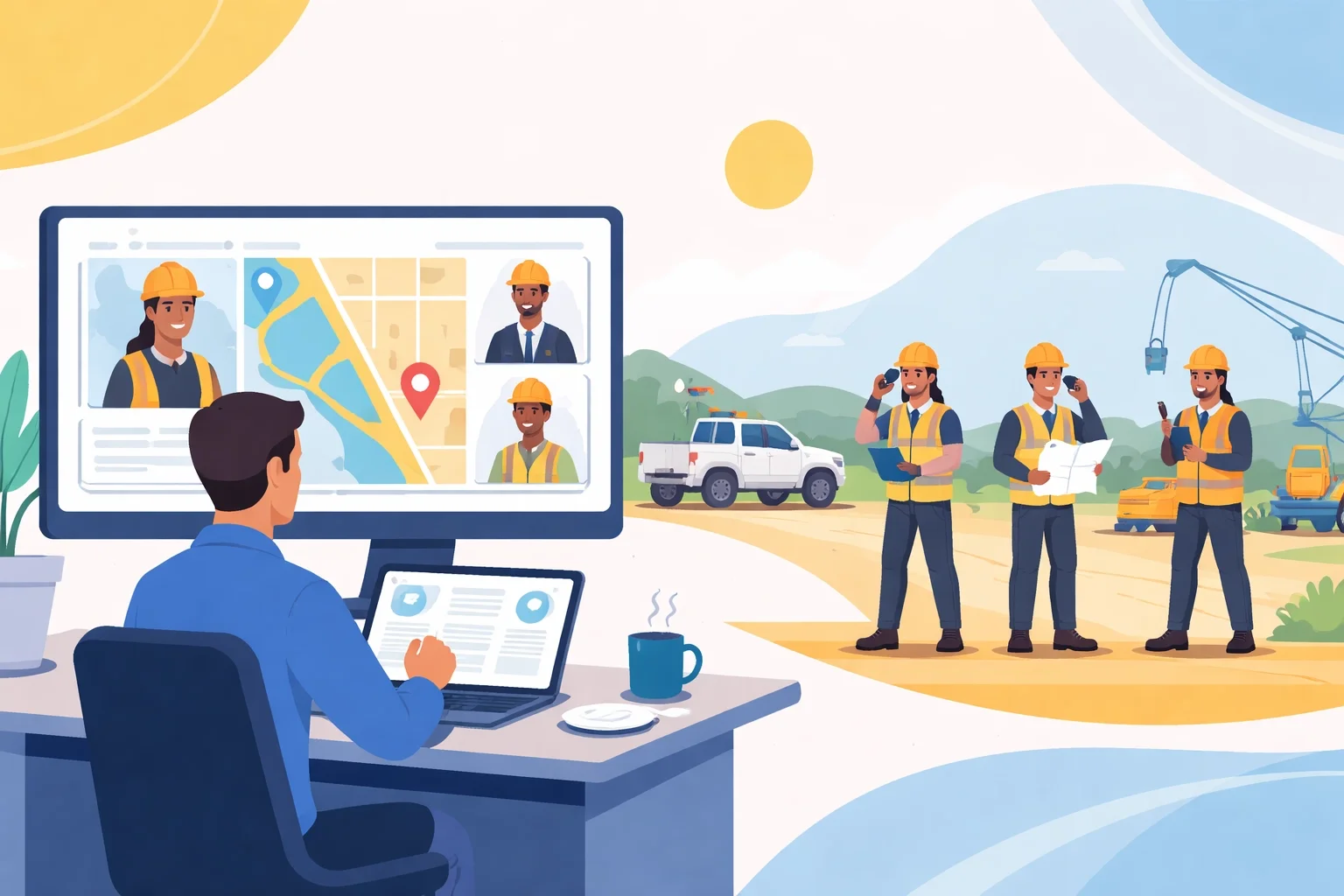
You started your business because you're good at the work. Plumbing, landscaping, HVAC, construction: whatever your trade, you know your craft inside and out. But somewhere along the way, you went from being on the job site to being stuck in the office. Or worse, you're bouncing between client meetings, supplier runs, and putting out fires while your crew is out there doing the actual work.
And now you're wondering: How do I lead people I can't even see?
It's one of the strangest transitions in running a field service business. You used to be the one swinging the hammer or turning the wrench. Now you're the one sending texts that say "How's it going out there?" and hoping for more than a thumbs-up emoji in response.
Here's the good news: you can absolutely lead a field crew from afar. You just need the right approach: and maybe a few tools that don't involve carrier pigeons.
The Real Challenge Isn't Distance: It's Trust
Let's get this out of the way first. The biggest obstacle to remote field management isn't geography. It's the nagging voice in your head that says, "Are they actually working right now?"
That voice is normal. But if you let it drive your decisions, you'll turn into the boss who texts every 30 minutes asking for updates. And nobody wants to work for that person.

Building trust with a field crew starts with one simple principle: assume good intent until proven otherwise. Your crew members are adults. Most of them want to do good work, get paid fairly, and go home feeling like they accomplished something. If you treat them like they're trying to get away with something, they'll eventually start acting like it.
Trust is also a two-way street. Your crew needs to trust that you've got their back: that when they run into a problem on site, you're going to help them solve it instead of blaming them for it. If you want to dig deeper into why this matters, check out our piece on fairness as the foundation of team morale.
Visibility Without the Helicopter
Here's where things get tricky. You need to know what's happening in the field. That's not micromanaging: that's just running a business. The question is how you get that visibility without making your team feel like they're being watched by a drone with trust issues.
The answer lies in systems, not surveillance.
When you have clear processes for how work gets documented, you don't need to constantly check in. Your crew logs their time when they arrive. They snap a photo when the job is done. They note any issues or delays. And you can see all of this without picking up your phone to ask, "So... how's it going?"
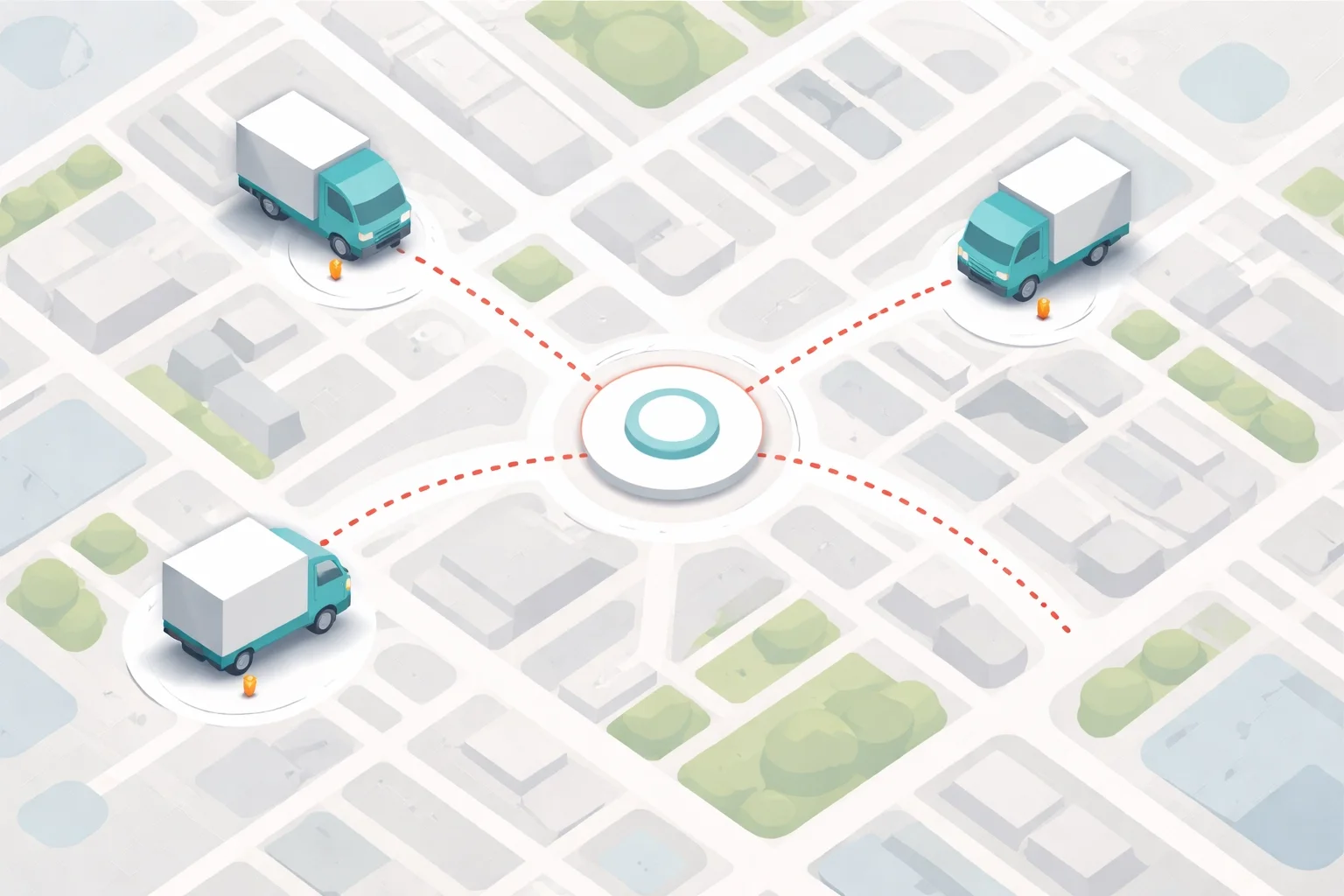
GPS tracking is a good example of this done right. Some owners feel weird about it: like they're spying. But here's the thing: when everyone knows the system exists and understands why, it becomes a non-issue. It's not about catching people slacking. It's about knowing where your trucks are so you can dispatch the nearest crew to an emergency call. It's about having proof when a client claims your team never showed up (spoiler: they did).
Real-time visibility helps you make better decisions without breathing down anyone's neck. That's the sweet spot.
Communication: Simple, Clear, and Often Enough
If there's one thing that will make or break remote leadership, it's communication. And I'm not talking about sending more messages. I'm talking about sending better ones.
Vague instructions are a disaster waiting to happen. "Head over to the Johnson property and take care of that thing we talked about" might make sense in your head, but your crew is going to show up without the right materials, do the wrong task, or waste an hour trying to figure out what you meant.
Clear communication means specifics. Address, scope of work, materials needed, timeline, and who to contact if something goes sideways. If you want a deep dive into how vague instructions cause chaos, we wrote a whole article on the downstream effects of unclear direction.
The other half of communication is frequency. You don't need to talk to your crew every hour, but you do need regular touchpoints. A quick morning check-in to confirm the day's priorities. An end-of-day wrap-up to capture what got done and what's carrying over. These rituals create rhythm, and rhythm creates accountability.
The Tools That Actually Help
Let's talk tech for a second. There's no shortage of apps, platforms, and gadgets that promise to solve all your field management problems. Most of them are overkill. A few of them are genuinely useful.
What you actually need:
Time tracking that doesn't require a PhD. Your crew should be able to clock in and out from their phone in seconds. If it's complicated, they won't do it.
GPS tracking that updates in real time. Not so you can play Big Brother, but so you can coordinate jobs, verify arrivals, and optimize routes.
A simple way to assign and update tasks. Digital job boards beat paper every time. They're searchable, they're shareable, and they don't blow away in the wind.
Photo documentation. Before and after shots protect you from disputes and help you maintain quality standards.
Labor Sync bundles all of this into one platform built specifically for field crews. It's not trying to be everything to everyone: it's focused on the stuff that actually matters when you're managing people you can't see. If you're still relying on paper timesheets and group texts, it might be worth a look. We've also compared paper timesheets vs. digital tracking if you want the full breakdown.

Daily Habits for Leading from a Distance
Tools are great, but they don't replace leadership. Here are a few habits that separate good remote managers from the ones who burn out (or burn through their team):
Start the day with intention. Before your crew heads out, make sure everyone knows what they're doing and why it matters. Even a two-minute call or message can set the tone.
Respond quickly to problems. When a crew member reaches out with an issue, they need help: not silence. The faster you respond, the less time gets wasted and the more your team trusts that you're actually there for them.
Celebrate wins publicly. Did someone knock out a tough job ahead of schedule? Did a customer send a compliment? Share it. Recognition costs nothing and means everything.
Address issues privately. If something went wrong, handle it one-on-one. Public call-outs destroy morale faster than almost anything else.
Protect your own bandwidth. Leading from afar is mentally exhausting. The mental weight of running a field business is real, and you can't pour from an empty cup. Build breaks into your day. Delegate what you can. And for the love of everything, stop checking your phone at 11 PM.
For more on what separates effective crew leaders from the rest, check out crew leader habits that actually work.
The Bottom Line
Managing a field crew from afar isn't about control. It's about clarity, trust, and systems that keep everyone on the same page without requiring constant oversight.
You don't have to be on every job site to run a tight operation. You just need to set clear expectations, communicate consistently, and give your team the tools to do their best work: even when you're not watching.
And when the systems are working? You might actually get to leave the office before dark. Wild concept, I know.