Balancing Productivity and Safety
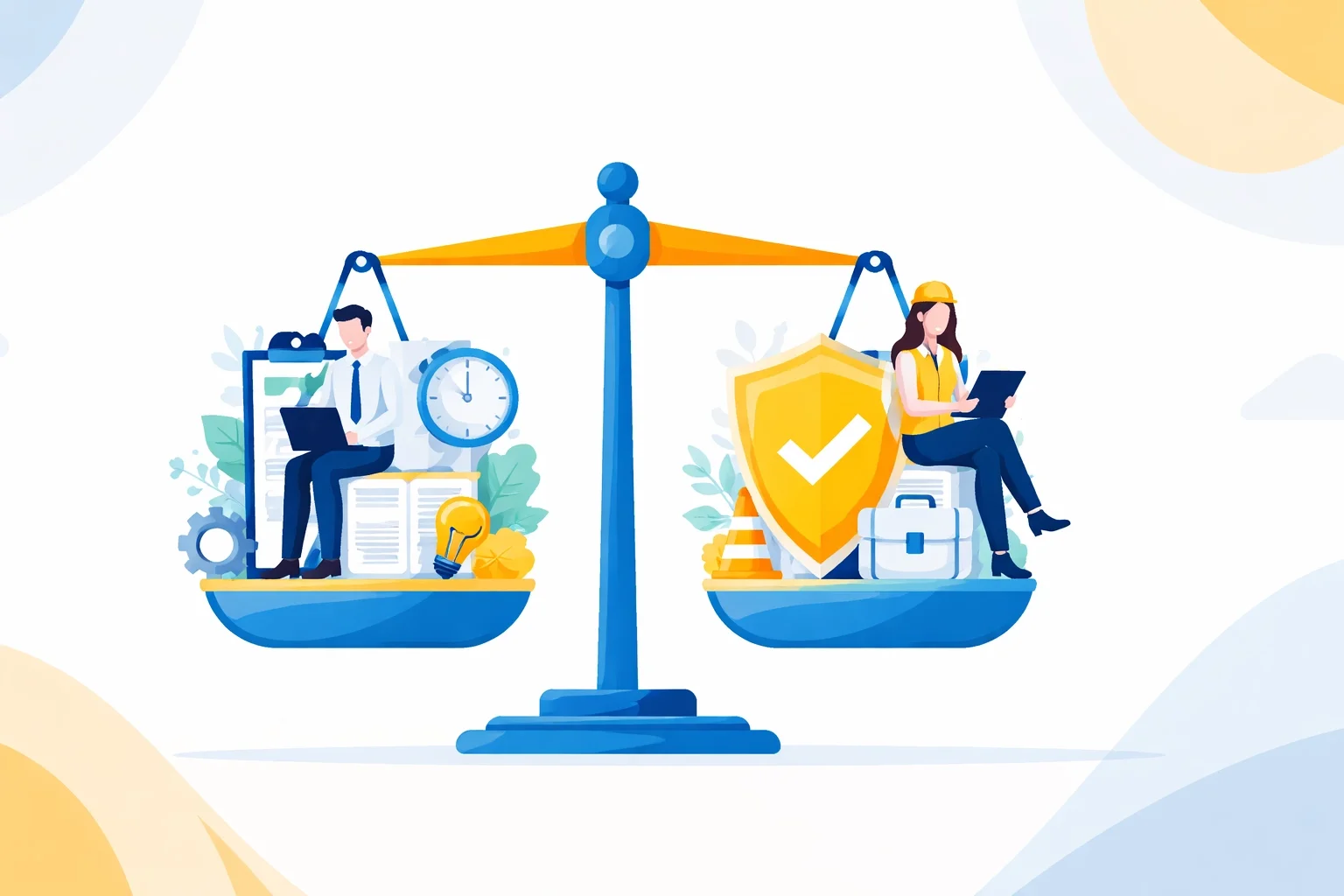
We've all been there. You're behind schedule, the client's getting antsy, and there's pressure mounting to just get it done. So the crew picks up the pace. Shortcuts start looking tempting. Someone skips a step here, rushes through a check there. And then... something goes wrong.
It doesn't have to be a major incident. Sometimes it's a near-miss that makes everyone's heart skip a beat. Sometimes it's a minor injury that could've been much worse. But here's the thing: when you're running a field-based business, the push-pull between productivity and safety is constant. And finding that balance? That's where the real skill comes in.
Let's talk about how to keep your crew moving fast and safe, because honestly, you shouldn't have to choose between the two.
The Speed Trap
Here's a hard truth: pushing too hard for speed eventually catches up with you.
When crews are rushed, they get stressed. Stressed workers make mistakes. Fatigued workers miss hazards. And before you know it, you're dealing with an injury, a workers' comp claim, or worse, a project that's now even more behind schedule because someone got hurt.
The research backs this up. Overworking significantly increases safety risks through stress, fatigue, and reduced alertness. When your team is running on empty, they're not just slower, they're dangerous. To themselves and to each other.
And let's be real: accidents are expensive. We're not just talking about the human cost (which is obviously the most important part). There's the paperwork, the insurance headaches, the potential lawsuits, the hit to your reputation. A single incident can wipe out weeks of "productivity gains" you thought you were making by cutting corners.
As we covered in why business feels harder, sometimes the things making your job difficult aren't obvious. Safety risks are often invisible until they're not.
Safety Isn't the Enemy of Productivity
Here's where things get interesting: safety and productivity aren't actually opposites. They're teammates.
Think about it. When your crew knows exactly what they're supposed to do, where they're supposed to be, and what hazards to watch for, they work more confidently. Confident workers move faster. They don't second-guess themselves. They don't waste time on confusion or backtracking.
A well-organized job site, where everyone has clear instructions and the right equipment, is a productive job site. Period.
The key is building safety into your workflow so it doesn't feel like an obstacle. It should feel like the foundation. When safety protocols are baked into how you operate (not bolted on as an afterthought), your team can focus on getting the job done instead of constantly worrying about what might go wrong.
We touched on this in downstream effects of vague instructions, when people don't have clear direction, chaos follows. And chaos is where accidents happen.
The Hidden Safety Benefit of Going Digital
Okay, here's where we talk about something that might not seem like a "safety" topic at first: time tracking and crew management.
Stay with me.
When you're running field operations with paper timesheets, phone calls, and guesswork, you're adding stress to your day. And stress trickles down. You're scrambling to figure out where people are. Crew leaders are fielding constant "where are you?" calls. Workers are rushing to fill out paperwork at the end of the day when they're tired and just want to go home.
All of that creates an environment where things slip through the cracks.
Now imagine a different scenario. You know exactly where your crews are in real-time. Clock-ins and clock-outs happen automatically. Job notes and updates flow without anyone making frantic phone calls. Suddenly, there's less chaos. Less stress. Fewer opportunities for someone to cut a corner because they're running late or scrambling.
Real-time visibility isn't just a productivity tool, it's a safety tool. When you can see what's happening across your operation, you can catch problems early. You can notice when someone's been working too many hours. You can make sure crews aren't being overloaded.
As we discussed in better decisions through visibility, seeing your operation clearly lets you make smarter calls. Including the ones that keep people safe.

Practical Steps to Balance Both
Alright, let's get tactical. Here are some real ways to keep productivity and safety in harmony:
1. Enforce Real Breaks
This sounds basic, but it's huge. Regular breaks every 1-2 hours keep workers alert and reduce fatigue-related mistakes. Yes, it "costs" time. But it saves you from the much bigger cost of accidents.
2. Set Clear Work Hours
Excessive overtime is a safety risk. Full stop. Establish boundaries and stick to them. Your team will be more focused during the hours they are working: which actually boosts output.
3. Rotate Strategically
If you've got crews doing physically demanding work, rotate tasks so nobody's doing the same repetitive motion all day. This reduces strain injuries and keeps energy levels more consistent.
4. Communicate Openly
Create an environment where workers can flag safety concerns without fear. The best safety insights often come from the people actually doing the work. If they're afraid to speak up, problems stay hidden until they explode.
5. Train Regularly (and Make It Practical)
Safety training shouldn't be a boring checkbox exercise. Make it hands-on, relevant, and focused on the actual hazards your crews face. When training feels useful, people actually remember it.
We talked about the importance of good habits in crew leader habits that work. Safety is one of those habits that needs to be modeled from the top down.

The Business Case for Safety
Let's talk dollars for a second. Because this is a business, after all.
Investing in safety pays off. Reduced workers' comp claims. Better employee retention (people want to work for companies that care about them). Less downtime from injuries. Fewer project delays.
Over time, a strong safety culture becomes a competitive advantage. Clients notice when your crews are professional and organized. They notice when your job sites are clean and hazard-free. That reputation builds trust: and trust wins contracts.
We explored this idea in reliability as a competitive advantage. Being the crew that shows up on time, does quality work, and doesn't have incident reports trailing behind? That's how you stand out.
And here's the thing about why good employees quit: feeling unsafe or overworked is a major factor. If you want to keep your best people, you need to show them you value their wellbeing. It's that simple.
A Safe Job Site Is a Profitable One
At the end of the day, the goal isn't to choose between speed and safety. It's to build systems that support both.
Clear communication. Real-time visibility. Automated tracking that takes the stress out of admin work. Sensible scheduling that doesn't burn people out. These aren't just "nice to haves": they're the foundation of an operation that runs smoothly and keeps everyone going home in one piece.
Because here's the bottom line: you can't be productive if your crew is hurt. You can't hit deadlines if you're dealing with incident investigations. And you definitely can't grow your business if your reputation takes a hit because of preventable accidents.
Safety isn't a speed bump. It's the road itself.
Build your operation on that road, and you'll find that getting things done fast and getting things done right aren't opposites at all. They're the same thing.