Planning for Climate Resilience
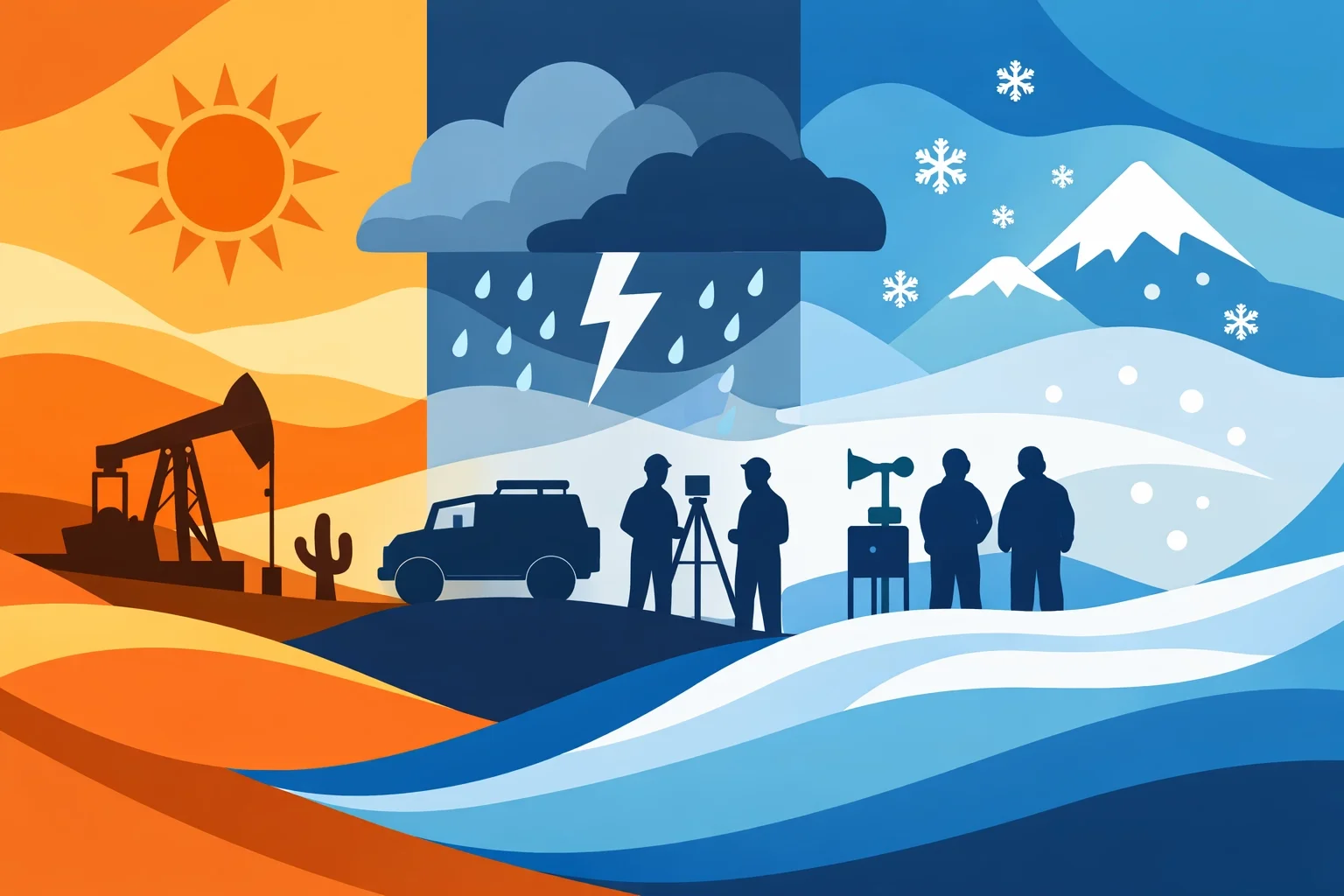
Let's be real: field operations have always dealt with weather. But today isn't your dad's worksite climate. We're talking 110°F heat indexes in June, ice storms in April, and "hundred-year floods" happening every three years. Your crew can't control the thermometer, but you absolutely can control how your business adapts.
Climate resilience isn't about being tougher than the weather, it's about being smarter. It means having protocols in place before the heatwave hits, not scrambling when someone goes down with heat exhaustion. It means knowing when to call it and shut down a site, not gambling with safety because you're behind schedule.
Here's the practical playbook for keeping operations running (and crews safe) when the weather gets wild.
The Real Cost of "Powering Through"
That mentality of "we've always worked through it" might've flown in decades past, but it's a liability now, literally. OSHA violations for heat illness prevention cost businesses an average of $15,625 per citation. One hospitalized worker can blow your insurance rates for years. And good luck recruiting when word gets around that your company doesn't take safety seriously.
Beyond the financial hit, there's the operational chaos. When you don't have weather protocols in place, every storm or heatwave becomes a crisis. Crews don't know if they should show up. Project managers are fielding 40 phone calls. Nobody knows who's where or if sites are even accessible.
Managing multiple jobsites gets exponentially harder when weather throws a wrench in things, unless you've planned for it.
Heatwave Protocol: Adjust Before Someone Drops
Extreme heat is now a months-long reality in most of the country, not a few rough days in August. Your heat protocol needs to be as standard as your PPE requirements.
Start shifts earlier. If you're running crews from 7 AM to 3 PM in July, you're doing it wrong. Shift to 5 AM starts when possible. Those early morning hours are significantly cooler, and you can wrap up before the worst heat hits. Yes, it's an adjustment. Yes, it's worth it.
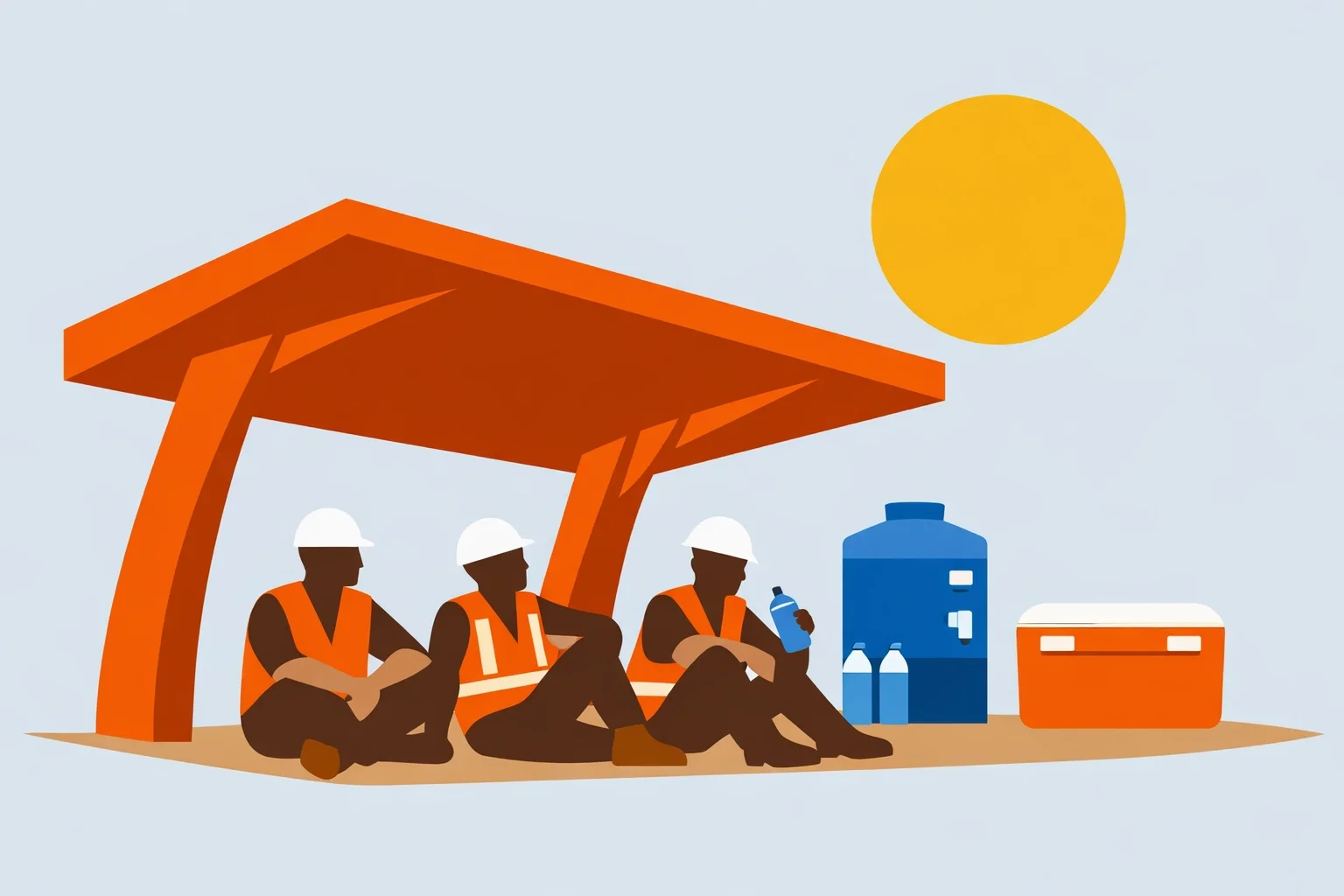
Mandatory breaks in shade. Not "encouraged" breaks, mandatory. Set timers if you have to. During extreme heat days (heat index above 100°F), NIOSH recommends 15-minute breaks every hour for heavy work. Build this into your schedule, not as an afterthought.
Hydration stations at every site. Not a single cooler that runs out by 10 AM. Multiple coolers, checked daily, with electrolyte options. If someone's drinking only energy drinks all day, they're headed for trouble.
Watch for the signs. Train everyone to recognize heat exhaustion symptoms: heavy sweating, weakness, cold/clammy skin, fast pulse, nausea. Heat stroke is the emergency, hot/dry skin, confusion, loss of consciousness. If you see it, call 911 immediately and cool them down while waiting.
When the heat index crosses certain thresholds, have a clear protocol for modifying work or shutting down entirely. One hospitalization isn't worth the day's productivity.
Storm and Severe Weather: Communication is Everything
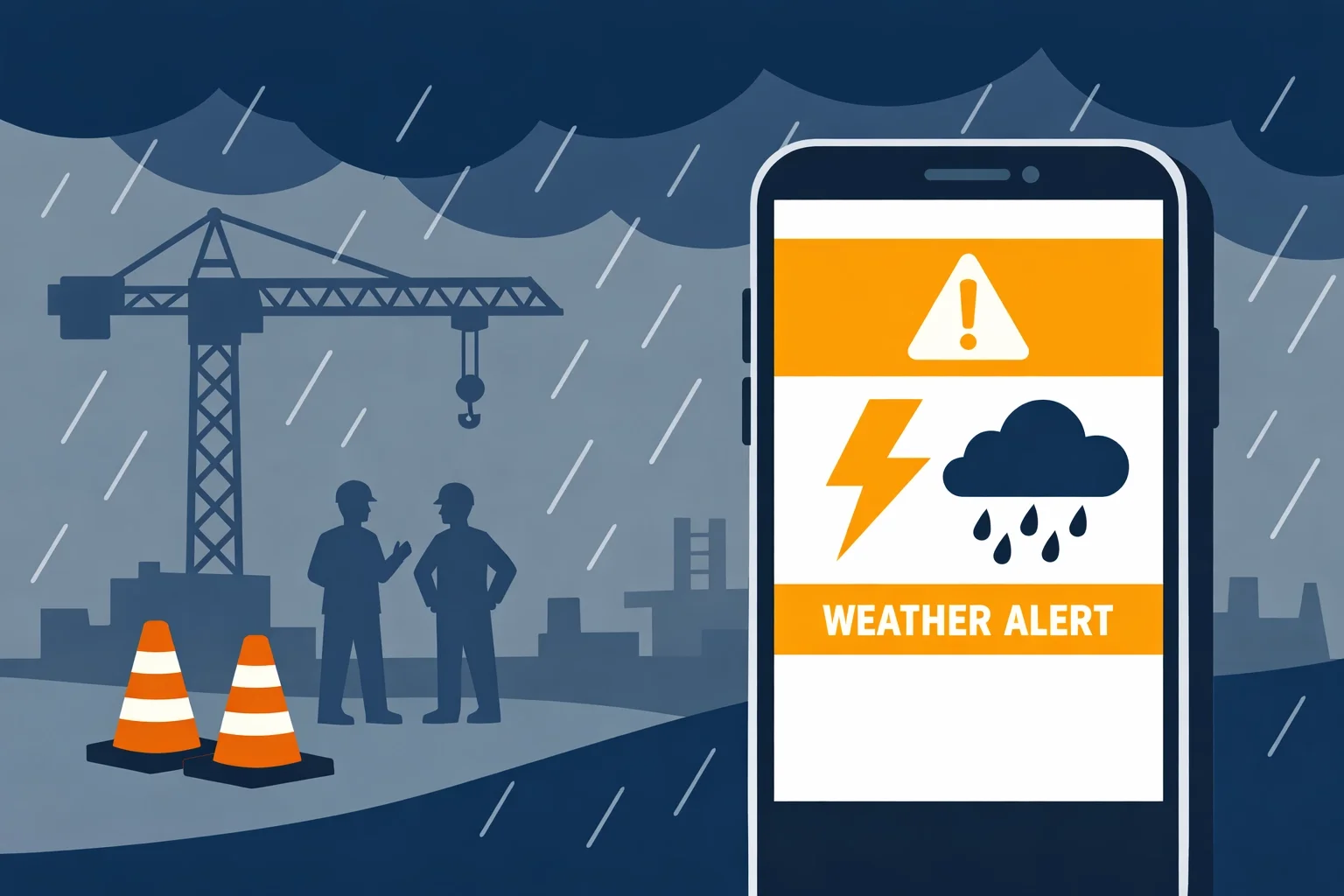
Storms don't always give you 24 hours' notice. Sometimes you've got two hours between "looks like rain" and "flash flood warning." That's where real-time communication systems save you.
Pre-storm checklist. Before severe weather season, identify which sites have flooding risks, which have exposed electrical, and which roads become impassable. Know your evacuation routes. Know where crews can shelter safely if they can't leave in time.
Clear shutdown protocols. Who makes the call to shut down a site? What's the threshold, tornado watch vs. warning? Lightning within 10 miles? Everyone should know the criteria before the storm shows up. When the decision is made, you need a way to notify all crews instantly.
This is where Labor Sync's real-time communication becomes critical. You can push updates to everyone simultaneously, "Site B is closed, do not report", instead of playing phone tag while the sky turns green. GPS tracking means you know exactly who's where and whether everyone made it off-site safely.
Scattered crews become a real safety liability during severe weather if you can't reach them quickly.
Cold Weather Operations: Don't Let Pride Cause Frostbite
Working in extreme cold is just as dangerous as extreme heat, but it doesn't get the same attention. Frostbite can happen in under 30 minutes when temps dip below 0°F with wind chill. Hypothermia doesn't require below-freezing temps, it can happen at 50°F if someone's wet.
Layering requirements. Mandate base layers, insulation layers, and wind/waterproof outer layers. Cold-weather PPE includes insulated gloves that still allow dexterity, thermal socks, and face protection for extreme wind chills.
Warm-up breaks. Heated trailers or vehicles for regular warm-up breaks. Again, not optional. When wind chills drop below 15°F, breaks should happen every 30-40 minutes.
Watch for warning signs. Shivering is actually a good sign, it means the body is still trying to warm itself. When shivering stops but the person is still cold, that's hypothermia progressing. Slurred speech, confusion, and clumsiness are red flags.
Equipment considerations. Batteries drain faster in extreme cold. Hydraulic systems can fail. Plan for equipment issues and have backup plans. Some work simply can't happen safely below certain temperatures, know those limits.
Offline Mode: When Weather Knocks Out Connectivity
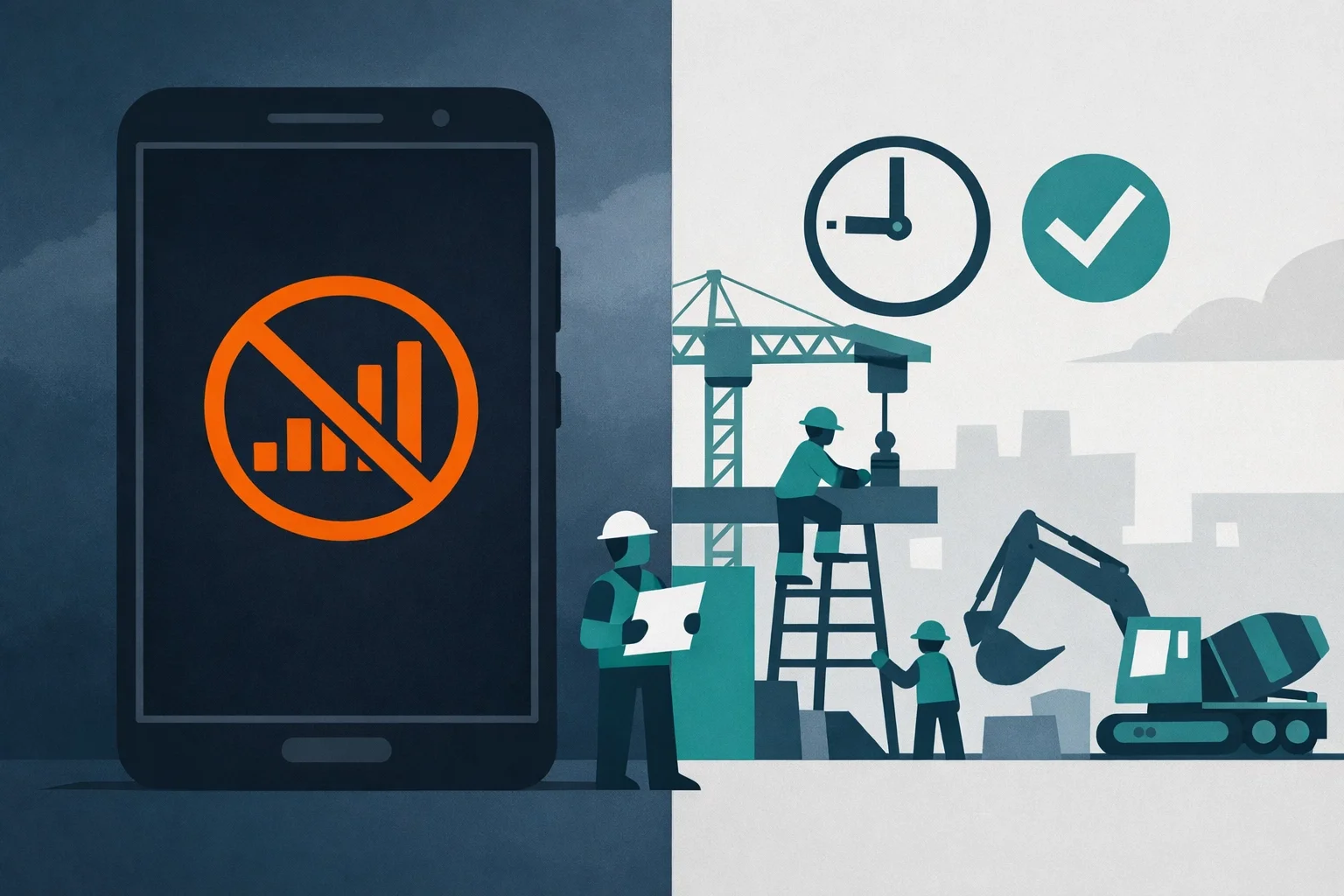
Here's a scenario: major storm rolls through, cell towers go down, and you've got crews spread across five sites. If your entire time tracking and communication system requires internet, you're now flying blind.
Labor Sync's offline mode solves this. Crews can still clock in, track their time, and log site notes even without connectivity. Once service returns, everything syncs automatically. You don't lose data, and you maintain accountability even when infrastructure fails.
Maintaining visibility during weather events prevents the operational chaos that can last for days after the weather clears.
GPS Tracking: Know Where Everyone Is When Things Go Sideways
During normal operations, GPS tracking helps with accountability and optimizing routes. During weather emergencies, it's a safety tool.
If you need to evacuate sites quickly or account for everyone during a rapidly developing situation, GPS data tells you exactly who's where. You're not guessing or relying on someone to remember to text you, you can see in real-time that everyone cleared the flood zone or made it off the exposed hilltop before lightning moved in.
It also helps with post-event assessment. You can see which sites were accessed, when crews arrived and left, and document everything for insurance or client purposes.
Building a Weather-Resilient Culture
Technology and protocols only work if your crew culture supports them. If the unspoken message is "tough it out" or "we don't stop for weather," people will ignore safety measures to avoid looking weak.
Lead from the top. When you as the owner or PM make the call to shut down for safety, you're setting the tone. "We don't risk lives for deadlines" needs to be more than a poster, it needs to be demonstrated.
Normalize weather discussions. Make checking the forecast part of morning meetings. "Heat index hitting 105 today, let's review our break schedule" shouldn't be unusual; it should be routine.
Reward good judgment. When a crew lead makes the smart call to pause work due to lightning or stop because someone's showing heat exhaustion symptoms, acknowledge that publicly. Make it clear that safety decisions are career-builders, not career-limiters.
Mobile workforce productivity doesn't mean pushing through unsafe conditions, it means working smart and adapting to circumstances.
Plan for the Extremes, Not the Averages
Climate data shows extremes are becoming more frequent. Planning for "typical weather" doesn't cut it anymore. You need protocols for the outliers:
Three-digit heat indexes that used to happen twice a summer now happen 15 times
Ice storms in regions that rarely saw them
Flash flooding in areas without historical flood risk
Wildfire smoke affecting air quality hundreds of miles from the actual fires
Review your weather protocols quarterly, not annually. What worked two years ago might not match current climate patterns. Stay ahead of it.
The Tech Advantage: Adaptation in Real-Time
Climate resilience isn't just about having plans on paper, it's about being able to execute them when things change fast. Modern field operations software like Labor Sync gives you the infrastructure to adapt in real-time:
Push urgent weather updates to all crews simultaneously
Track who received the message and when
Maintain time tracking even during connectivity outages
Use GPS to verify safe site evacuations
Document weather-related schedule changes for clients
Keep projects on track with clear communication about weather delays
When you're explaining to a client why work stopped, having timestamped weather updates and documented site conditions beats "it was too hot" every single time.
Understanding why business feels harder often comes down to operating with systems designed for yesterday's climate.
What Resilience Actually Looks Like
Climate-resilient field operations aren't about never stopping work. They're about:
Starting earlier during heat waves to avoid peak temperatures
Having clear thresholds for weather-related shutdowns
Communicating instantly when conditions change
Maintaining operations visibility even without internet
Training everyone to recognize danger signs
Building a culture where safety decisions are respected
The crews that thrive today aren't the ones that power through no matter what: they're the ones that adapt quickly, protect their people, and keep operations organized even when weather gets wild.
Your competition is still figuring out who showed up during yesterday's storm. You've already got timestamped GPS data, confirmed site shutdowns, and crews who know exactly what the protocol is for tomorrow's heat advisory.
That's not just climate resilience; that's a competitive advantage.