From Blueprints to Smartphones
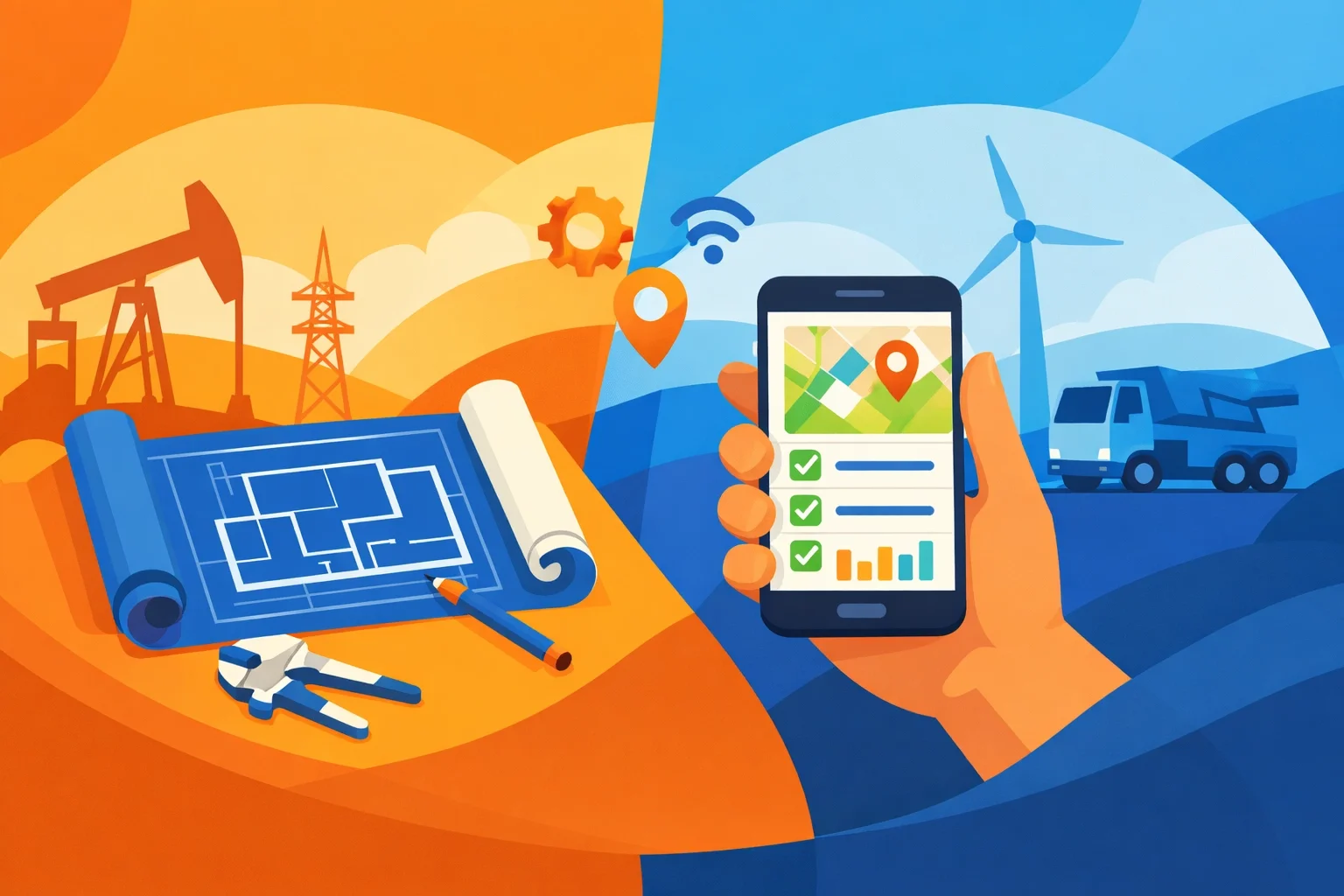
Remember when managing a field crew meant you actually needed a physical filing cabinet? When blueprints arrived rolled up in tubes, and you'd spread them across a dusty tailgate, hoping the wind didn't turn them into kites? When timesheets came back at the end of the week covered in coffee rings, illegible handwriting, and mysterious calculations that somehow never added up?
Yeah, those days are gone. And honestly? Good riddance.
The smartphone revolution didn't just change how we order pizza or argue with strangers on the internet. It fundamentally transformed how field operations work. What used to require clipboards, radios, filing cabinets, and way too many phone calls now fits in everyone's pocket.
Let's talk about how we got from there to here, and why it matters more than you might think.
The Old Way Wasn't Romantic, It Was Just Messy
There's a temptation to get nostalgic about "the old days" of construction and field service. The truth? It was inefficient, frustrating, and expensive.
Your morning started with dispatch calls. Someone had to physically call each crew member, confirm they were awake (or wake them up), and explain where they needed to be. Then you'd hope they actually showed up at the right address with the right equipment. No tracking, no confirmation, just crossed fingers.
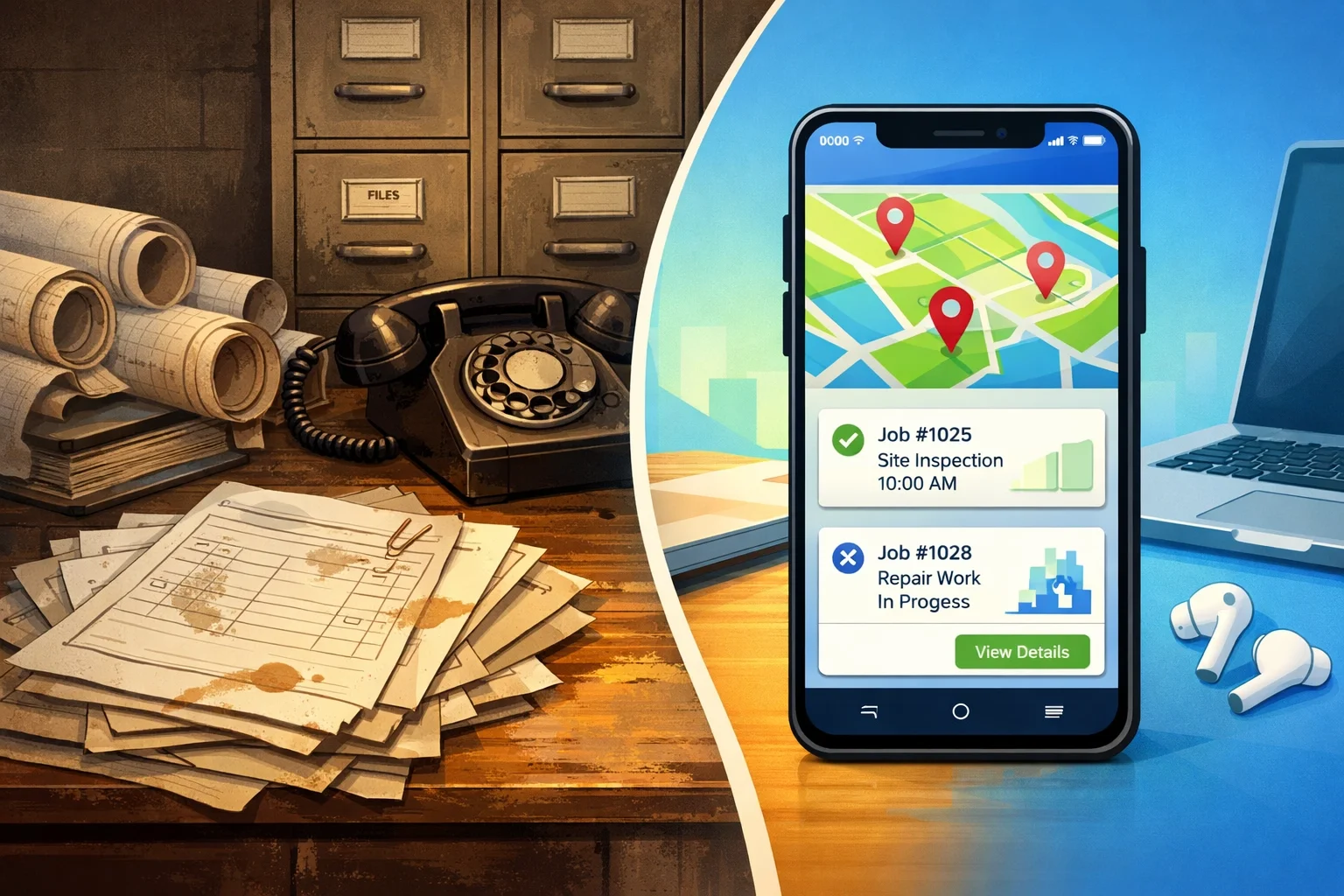
Job information lived in binders. If someone needed to check specs, previous work notes, or customer history, they'd have to call the office. Then someone in the office had to find the right binder, flip through pages, and relay information over a scratchy phone connection. "What was that? Fifteen or fifty? You're breaking up!"
Timesheets? Don't even get me started. At the end of each week, you'd collect crumpled papers with questionable math. Half the time, crew members would forget to track their hours accurately. The other half, they'd "round up" generously. Your office admin would spend hours deciphering handwriting, checking math, and trying to figure out which "Johnson job" someone worked on when you had three Johnsons that week.
And weather delays, traffic issues, or last-minute changes? Good luck communicating those in real-time to crews already scattered across town.
The system worked in the sense that things eventually got done. But "eventually" and "worked" are doing a lot of heavy lifting in that sentence. If you were managing more than a handful of people, you were essentially playing telephone all day while drowning in paperwork.
When Everything Went Digital (And Why It Actually Stuck This Time)
The shift to mobile apps wasn't immediate. Early attempts were clunky. Remember those bulky PDAs? Those weren't it. The breakthrough came when smartphones became powerful, affordable, and, most importantly, already in everyone's pocket.
Suddenly, you didn't need to buy specialized equipment or train people on complicated systems. People already knew how to use their phones. The question shifted from "Can we get technology into the field?" to "What should that technology actually do?"
The answer: Everything the paper used to do, but faster, more accurate, and with less chance of coffee damage.
Modern mobile workforce management apps handle job assignments, time tracking, GPS verification, document access, communication, and data collection, all in real-time. Your crew member clocks in from their phone. You see it immediately. They arrive at a job site. You see it immediately. They need specs or photos from a previous visit. They pull it up immediately.
That word, immediately, changes everything. As we explored in our article about mobile workforce productivity, the shift from delayed information to instant access fundamentally reshapes how field operations run.
The Real-Time Revolution: A Bird's-Eye View From Your Office (Or Couch)
Here's the game-changer: real-time visibility.
With paper systems, you managed your field crews essentially blind. You sent them out in the morning and hoped for the best. Updates came through phone calls, when crew members remembered to call, and when they had signal, and when they weren't, you know, actually working.
Mobile apps flip this completely. Managers now have a live dashboard showing where every crew member is, what job they're working on, how long they've been there, and whether they're on schedule. It's like upgrading from driving with your eyes closed to having GPS navigation with traffic updates.
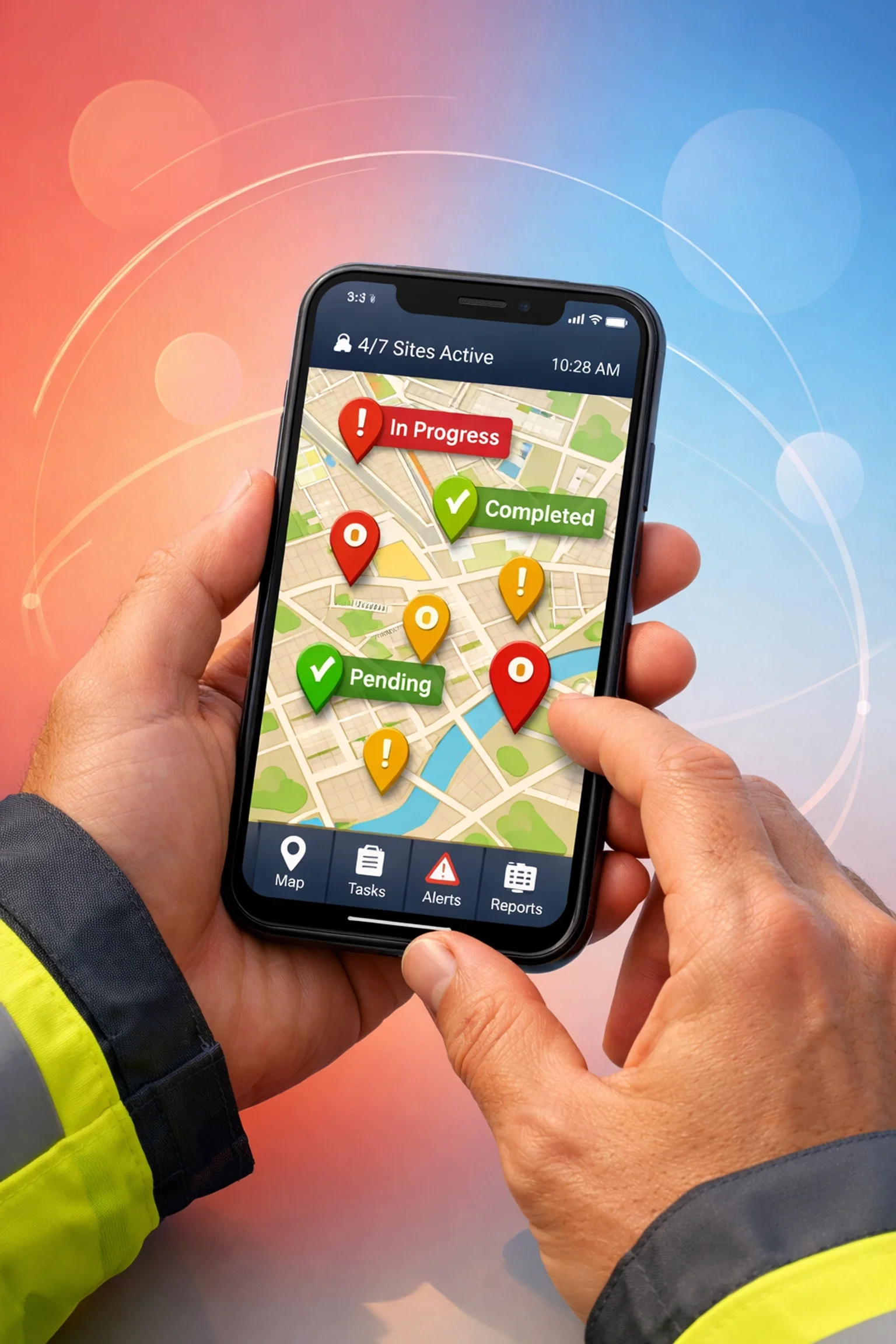
This visibility solves problems before they become disasters. See someone's been at a 2-hour job for 4 hours? You can check in, offer help, or reschedule the next appointment. Notice someone's heading to the wrong address? Redirect them before they waste 45 minutes driving across town. Customer calls with a rush job? You can see exactly who's nearby and available.
The impacts ripple through everything. Better scheduling means more jobs per day. Better tracking means accurate billing. Better communication means fewer mistakes and do-overs. As discussed in our post about managing multiple jobsites, this kind of visibility becomes absolutely critical as you scale.
One Platform, Many Languages: Making Diverse Crews Work Better Together
Let's address something important that often gets overlooked: not everyone on your crew speaks the same language as their first language.
Construction, landscaping, field service, these industries thrive on diverse workforces. But language barriers have historically created real problems. Instructions get misunderstood. Safety protocols aren't fully grasped. Time tracking becomes a guessing game when someone can't read the form.
Modern mobile apps solve this through multilingual capabilities. A crew member can set their app to Spanish, Polish, Vietnamese, or whatever language they're most comfortable with. They see job details, safety alerts, and instructions in their preferred language. Meanwhile, managers see everything in their language. Everyone's on the same page, literally.
This isn't just about convenience, it's about safety, accuracy, and respect. When people can interact with work tools in their native language, they make fewer mistakes, work more confidently, and feel more valued. For platforms like Labor Sync, multilingual support isn't a bonus feature. It's fundamental to serving the real, diverse workforce that keeps our industries running.
Goodbye Human Error, Hello Accurate Payroll
Let's talk about everyone's favorite topic: payroll. (Okay, it's nobody's favorite topic. But it matters.)
Paper timesheets are error factories. People forget to log hours. They estimate instead of tracking precisely. They write illegibly. They lose the sheet entirely. Then your admin team spends hours trying to reconstruct reality from incomplete information, making their own estimates and hoping for the best.
Every error costs money: either you underpay people (bad for morale, bad for retention, possibly illegal) or you overpay (bad for your bottom line). Neither option is great.
Mobile time tracking eliminates most of this. Crews clock in and out with a button press. GPS confirms they're actually at the job site (no more buddy punching). The app tracks hours automatically, down to the minute. Everything syncs to your office system in real-time.

When payroll day arrives, the data's already there. No transcription. No guesswork. No arguments about who worked how many hours where. Just accurate information flowing automatically from field to payroll. Many businesses report cutting payroll processing time by 70% or more after switching to mobile time tracking.
The accuracy extends beyond just hours. You can track labor costs per job, compare estimated vs. actual time, spot efficiency problems, and make smarter bids on future work. All because the data's clean from the start. Our article on overtime to output dives deeper into how better tracking leads to better business decisions.
The Practical Impact: What Actually Changes Day-to-Day
Theory's nice. But what does this actually look like in practice?
Morning dispatch takes 5 minutes instead of 45. You send everyone their assignments through the app. They confirm receipt. Done. No phone tag, no miscommunication about addresses, no forgotten details.
Field problems get solved faster. Crew member hits a snag? They snap a photo, send it through the app with a quick note, and you provide guidance immediately. No waiting for them to finish the job and call you later when they can barely remember what the issue was.
Customers get better service. You can send real-time updates about arrival times. Crews can access complete service history for each customer, providing more personalized service. Issues get documented thoroughly, not captured on coffee-stained paper that gets lost.
Your office stays organized. All job information, photos, notes, and time records stay in one digital system. Need to find details about a job from six months ago? Search instead of dig through filing cabinets. As we covered in our article about organizing documents, going digital dramatically reduces the chaos.
Scaling becomes possible. With paper systems, adding more crews meant proportionally more chaos. With mobile systems, you can manage 50 people as easily as you managed 10. The technology scales; paper doesn't. This becomes crucial during those seasonal work periods when your workforce temporarily doubles.
Looking Forward: This Is Just the Beginning
Here's the thing about technology: it keeps getting better. What seemed impossible five years ago is standard now. What seems cutting-edge today will be basic tomorrow.
We're already seeing AI work its way into field operations: smart scheduling that optimizes routes automatically, predictive maintenance that spots problems before they happen, automated job costing that helps you bid more accurately. The smartphone in your crew member's pocket is more powerful than the computers that sent people to the moon. We're just starting to figure out what to do with that power.
But the foundation is already here. Mobile apps have already transformed field operations from guess-and-hope to see-and-know. From paper trails to data streams. From delayed reactions to real-time management.
The businesses thriving today aren't the ones still rolling out blueprints on truck tailgates. They're the ones who embraced the smartphone revolution and used it to work smarter, not just harder. They're tracking their key metrics, making better decisions with visibility, and streamlining processes that used to drain time and money.
The Choice Is Yours (But Really, There's Only One Choice)
You can stick with paper if you want. Keep the clipboards, the filing cabinets, the coffee-stained timesheets. Some people still use fax machines too.
Or you can join 2026 and put the power of modern technology in your team's hands. The tools exist. They're affordable. They're proven. And they're already in your competitors' pockets.
The question isn't whether mobile apps will transform field operations. They already have. The question is whether you'll be part of that transformation or left behind wondering why your crews can't keep up.
From blueprints to smartphones. From guesswork to data. From chaos to control. That's the journey. Where your business lands is up to you.